

Last updated October 16, 2026
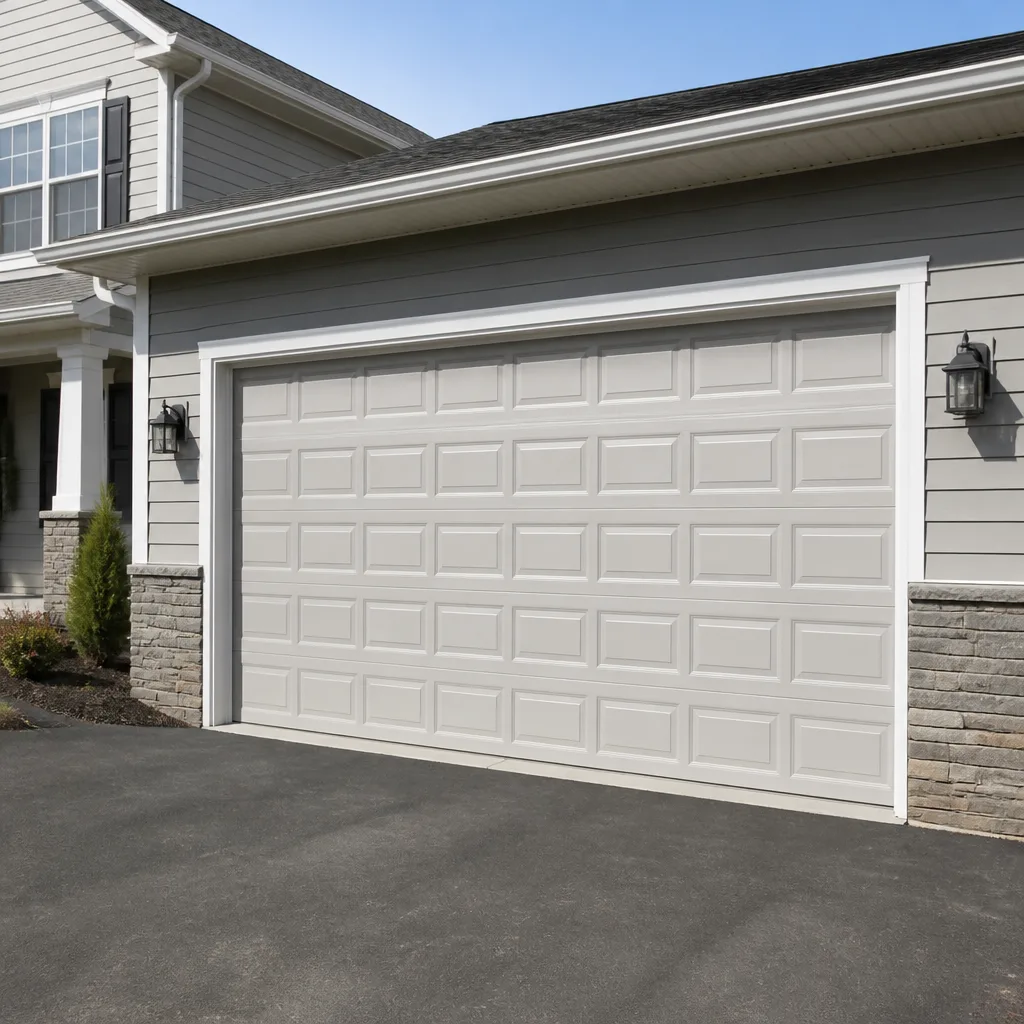 Raised-panel steel
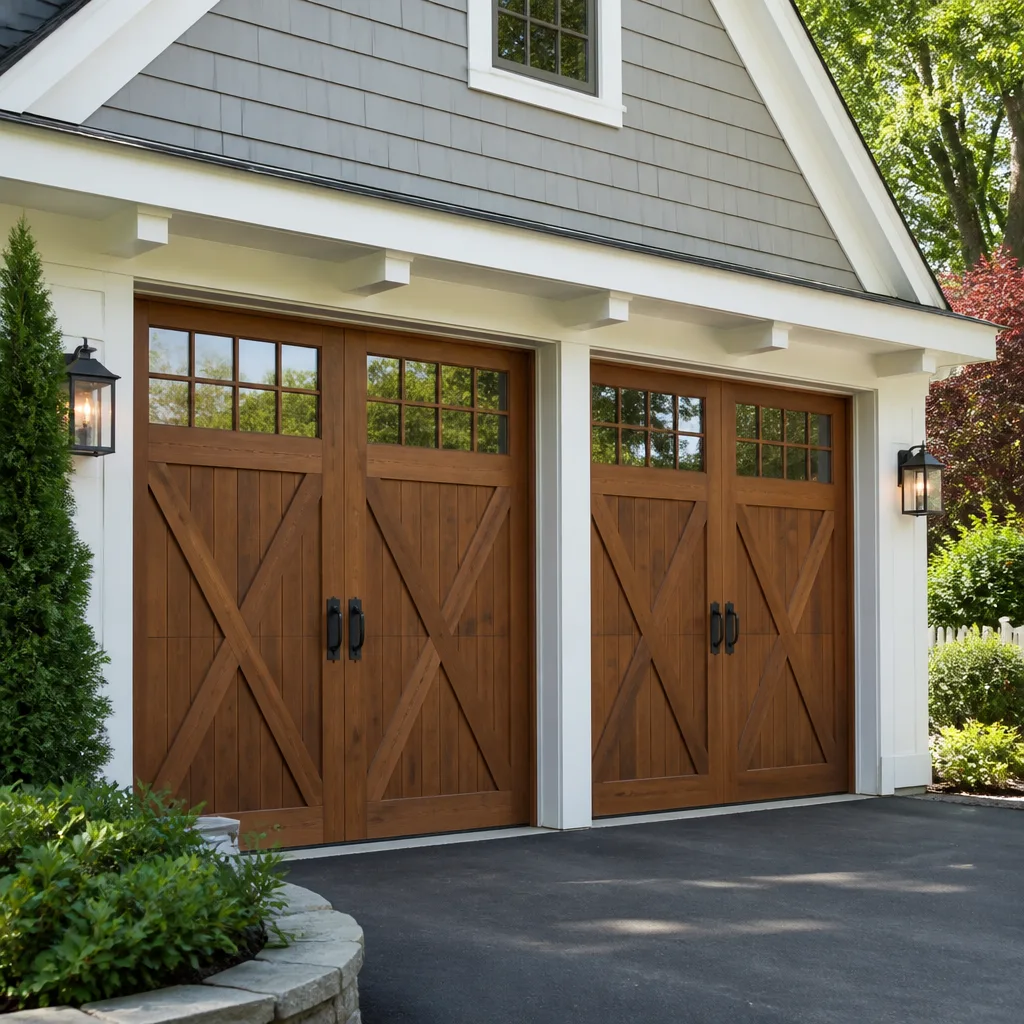 Carriage house
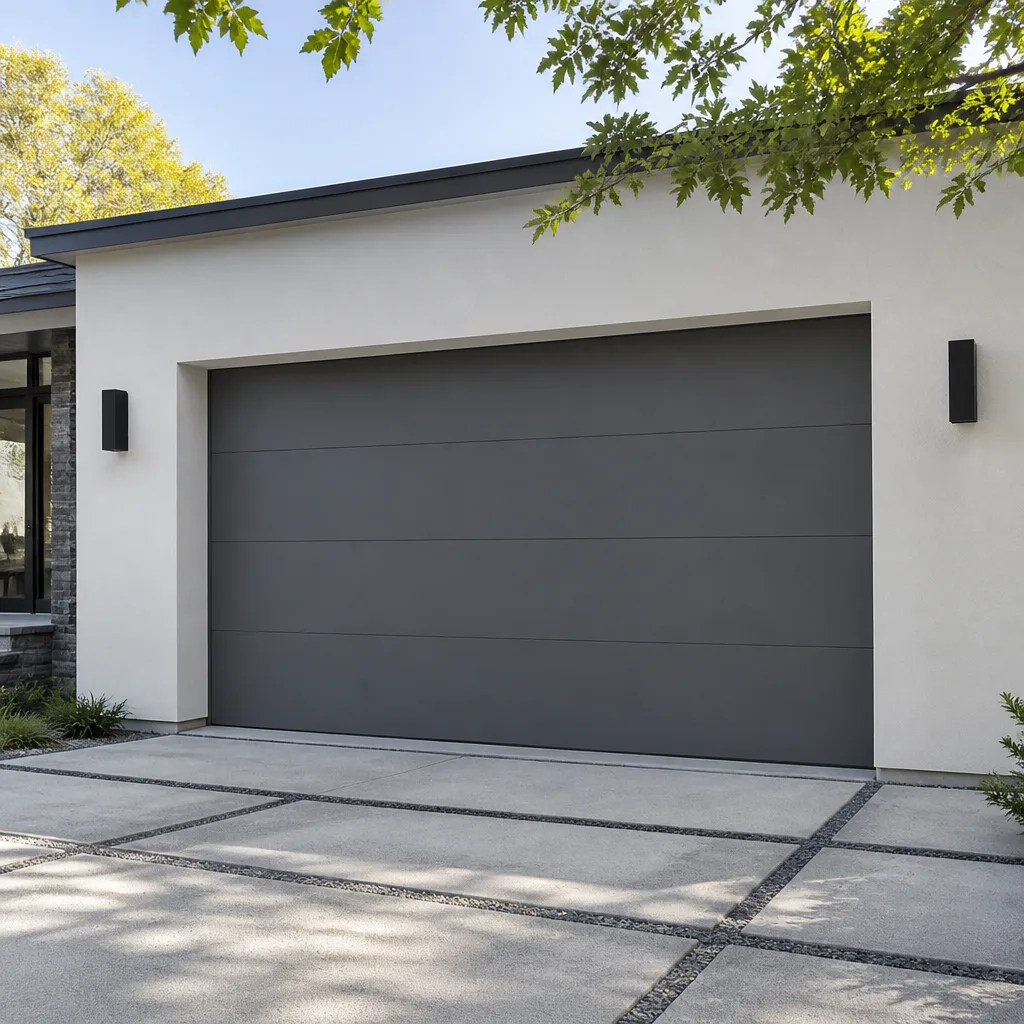 Modern flush
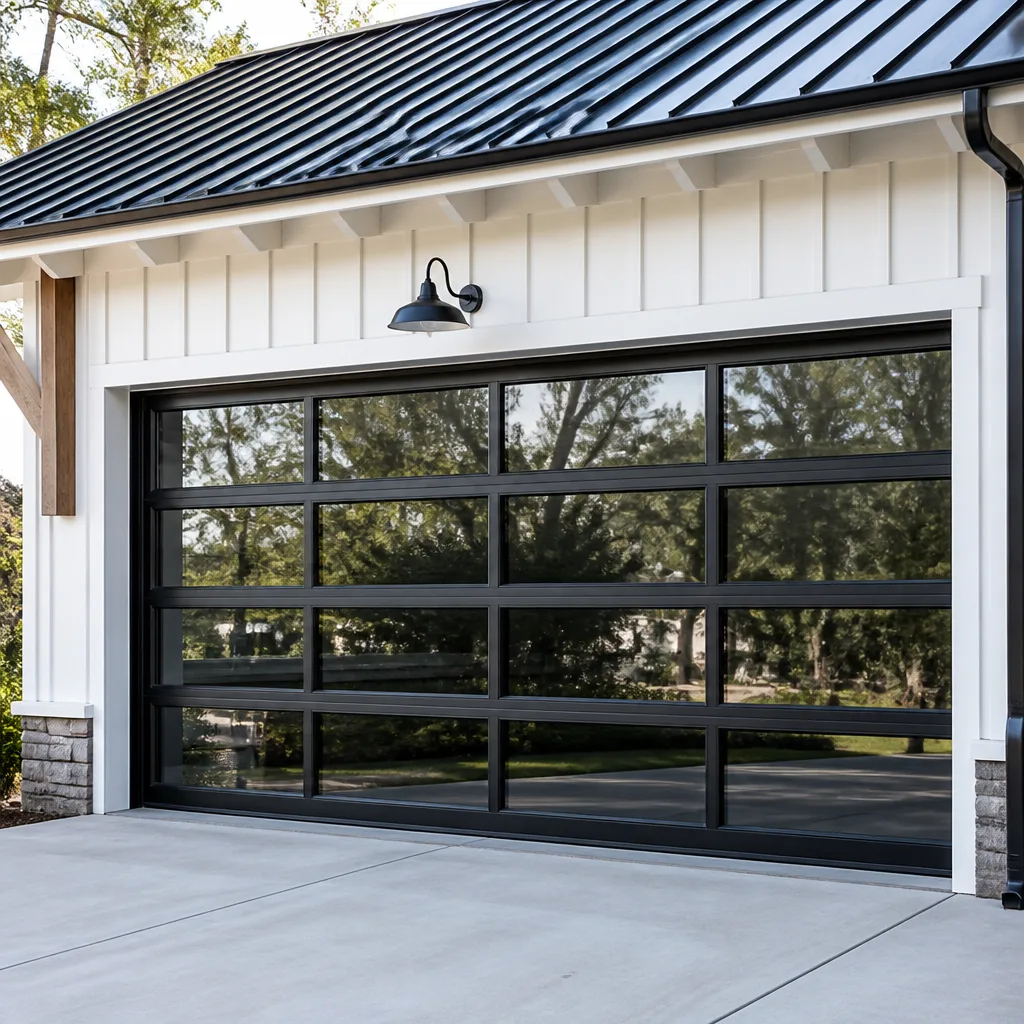 Full-view glass
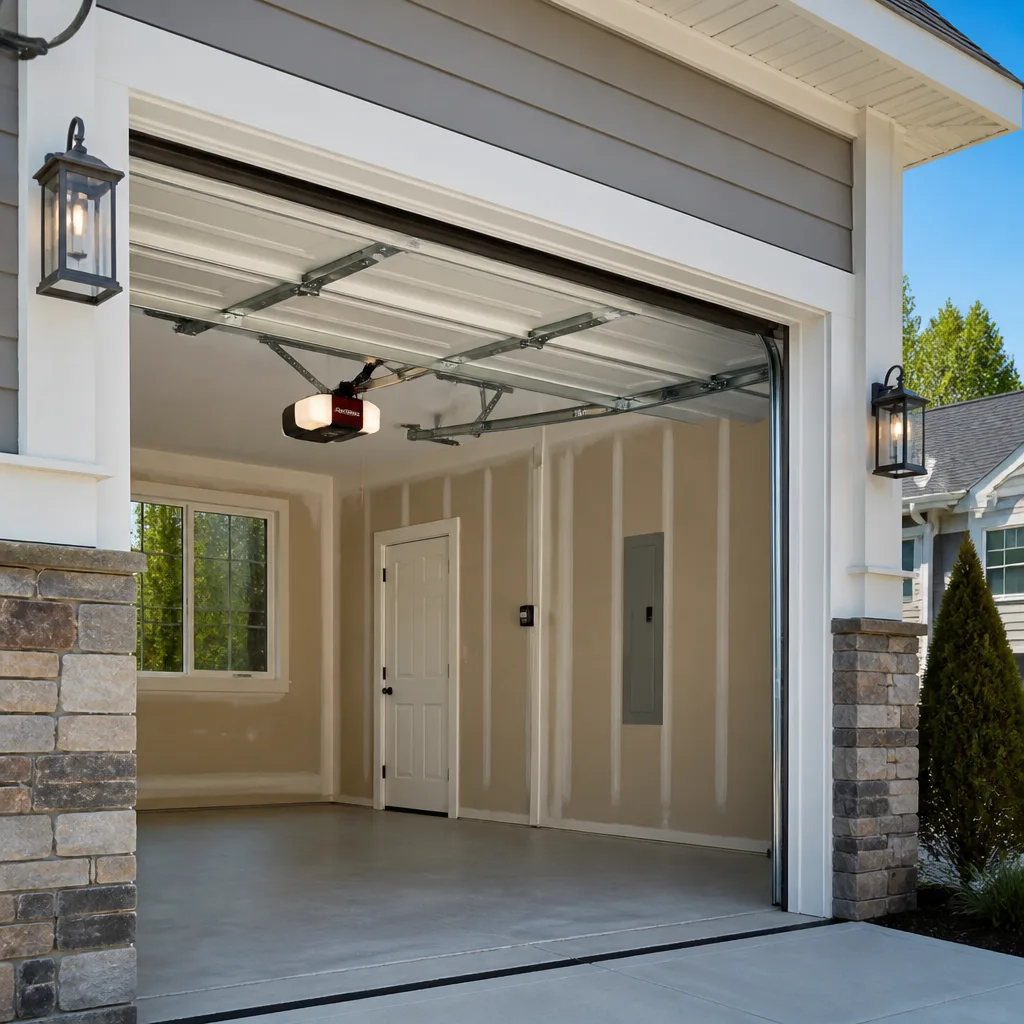 LiftMaster openers
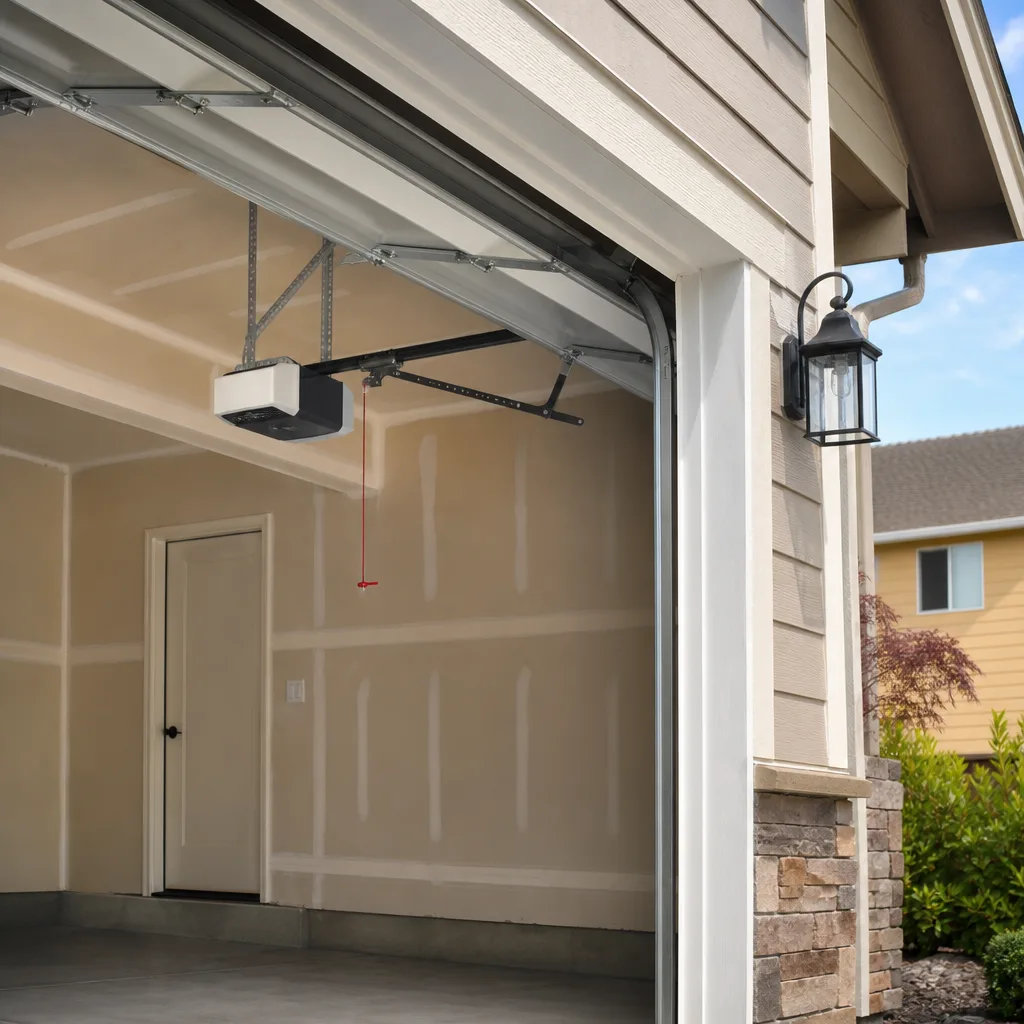 Chamberlain openers
Full 25-point door and opener safety check with every visit - springs, cables, rollers, tracks, and your LiftMaster or Chamberlain opener included
You get a price before we start. It does not change when the truck arrives.
Get your free estimateDIY vs Professional Garage Door: The Houston Homeowner’s Decision Guide
Replacing a bottom weatherseal yourself is a reasonable Saturday project. Adjusting torsion spring tension yourself is a documented cause of fatalities, and the two jobs look equally approachable on a YouTube tutorial. In Houston, the stakes are higher than in most markets because a garage door that fails during a windstorm does more than trap your car. It becomes the breach point that lets pressure into the house and turns a contained repair into a structural claim. This guide draws the line task by task, and we’re honest about where the risk math favors a homeowner and where it doesn’t. You’ll finish with a clear decision framework, a Garage Door Cost Breakdown: The Houston Homeowner’s Reference for 2026, and a documentation method that protects your insurance standing either way.
Quick Answer
DIY is the right call for about four specific maintenance tasks: lubrication, weatherseal replacement, sensor cleaning and alignment, and cosmetic dent work. Professional repair is the right call for anything involving torsion spring tension, lift cables, track geometry, or opener electrical work, because those failures carry injury risk, can void your door warranty, and can complicate a Houston windstorm insurance claim. The split is roughly 20% DIY and 80% professional when you factor in the Garage Door Permits, Codes & Inspections in TX: What You Need to Know and liability implications specific to this region, not just the skill check.
Styles & brands we work with
Table of Contents
- The DIY-Safe List: Four Tasks You Can Do This Weekend
- The Professional-Only List: Four Tasks That Are Not Worth the Risk
- Insurance, Warranties, and Houston Windstorm Liability
- The Real Cost Comparison: Tool Rentals, Parts Markup, and the Follow-Up Call
- What a Video Prepares You For, and What It Leaves Out
- How to Document DIY Work So It Doesn’t Complicate a Claim
- Houston-Specific Variables: Heat, Humidity, and Storm Season
- Common Mistakes to Avoid
- When to Call a Professional
- Frequently Asked Questions
The DIY-Safe List: Four Tasks You Can Do This Weekend
Some garage door tasks are genuinely within reach for a Houston homeowner with basic tools and a free afternoon. These four jobs share three characteristics: they don’t involve stored mechanical energy under tension, they don’t alter the door’s balance or travel geometry, and a mistake won’t injure you or void a warranty.
1. Lubrication
Garage door lubrication is the highest-value maintenance task and the lowest-risk one. A can of white lithium grease or silicone spray costs $8 to $14 at any Houston hardware store, and the job takes about 20 minutes. The targets are the rollers, hinges, and the torsion spring itself. Door manufacturers vary on recommended intervals, but in Houston’s humidity we recommend every six months. The salt air near Galveston Bay and the fine clay dust from Houston-area construction accelerate wear on unsealed bearings. Use white lithium on the spring and silicone on the rollers and hinges. Avoid WD-40 as a lubricant. It’s a solvent and it strips existing grease.
2. Bottom Weatherseal Replacement
The rubber strip along the bottom of the door deteriorates faster in Houston than almost anywhere else. Summer attic and garage temperatures regularly exceed 120 degrees, and the rubber compound used in cheap seals breaks down and cracks under that repeated heat cycle. Replacing the bottom seal is a 45-minute job. The seal slides out of a T-channel retainer on most doors made after 1995. You’ll need a replacement seal matched to your door brand, which runs $25 to $60 for Chamberlain and Clopay-sized T-channels. Soapy water helps the new seal slide through. A utility knife trims the excess. No springs, no cables, no tension. This is the textbook DIY job.
3. Sensor Alignment and Cleaning
Photo-eye sensors sit about six inches off the floor on each side of the door opening. They get bumped, they collect Houston dust and pollen, and the LED indicator light tells you when the beam is broken. A door that reverses for no visible reason is usually a sensor problem. Cleaning is simple: a dry cloth on both lenses. Alignment is a matter of loosening the wing nut on the sensor bracket, adjusting until both LEDs are solid, and retightening. If the door still reverses after alignment, the issue is likely the wire run or the opener logic board, and that’s the point where it stops being a DIY job.
4. Cosmetic Dent Work
Minor panel dents from a basketball, a ladder, or a car bumper mishap are cosmetic and, on steel doors, sometimes recoverable with a rubber mallet and a block of wood from the inside. This does not involve disassembling the door. It doesn’t change the spring balance. It doesn’t touch the cables. The caveat: if the dent is on a panel that has cracked or separated at a hinge point, the panel is compromised and you’re now in professional territory because continued operation under load can propagate the crack and cause a sudden failure.
These four tasks are the entire DIY-safe list in our view. Everything beyond them involves either stored energy, structural loading, or electrical wiring. We build our Garage Door Repair in Houston work around that distinction.
The Professional-Only List: Four Tasks That Are Not Worth the Risk
These four repair categories are where we draw the professional line without exception. The reasoning below is specific, and it’s not about protecting trade revenue. It’s about the failure mode when each of these goes wrong.
1. Torsion Spring Replacement and Adjustment
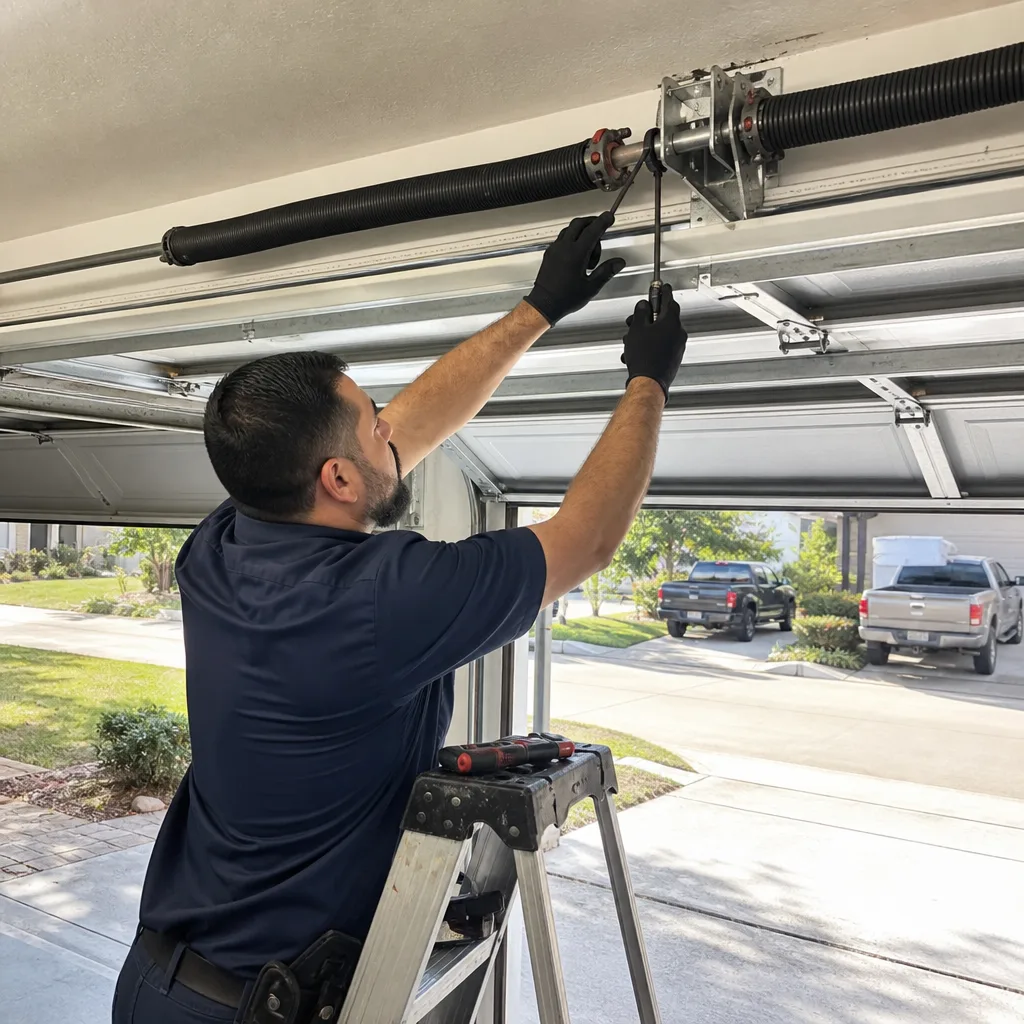
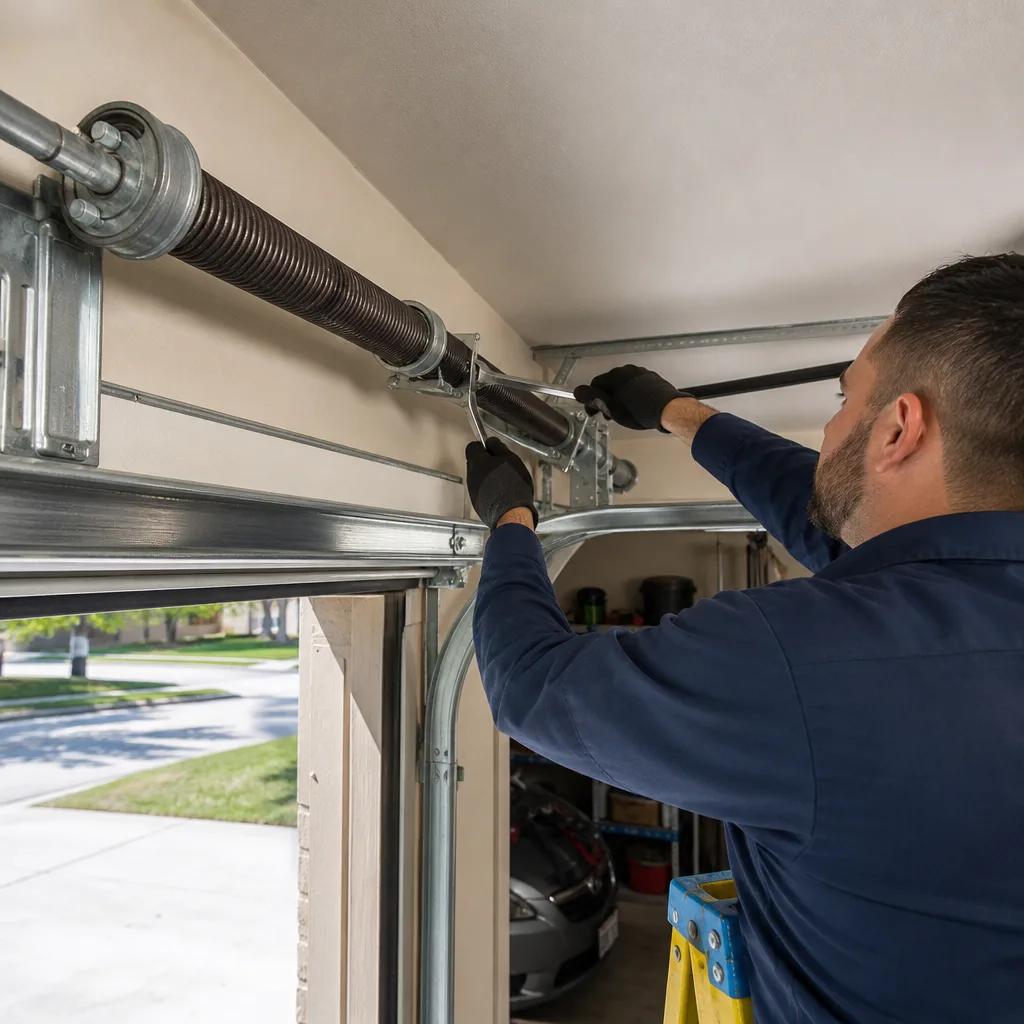
A torsion spring, the thick coiled spring mounted above the door, bears most of the lifting load. That load on a typical 16-foot Houston double door is between 150 and 250 pounds of lifting force, and the spring stores that energy under rotational tension. When a torsion spring breaks, it releases that energy instantly. When a homeowner attempts a manual wind or unwind with a pair of steel rods on a spring that still has tension, the rod becomes a lever that can strike at high speed. The fatality statistics for this exact scenario are well documented. This is our single most frequent repair call in Houston, and we replace torsion springs in pairs because both springs share the same cycle life. A spring rated for 10,000 cycles that breaks after 8 years means its partner is at 95% of the same fatigue life. The fix is not DIY. It is the clearest professional-only line on the entire list.
2. Lift Cable Repair and Replacement
Garage door cables run through a cable drum at each end of the torsion bar and carry the door’s weight when the spring system is in operation. On a standard door, the cable wraps cleanly in a single track on the drum. On heavy insulated doors, specifically Clopay and Amarr doors with thicker steel backing, the drum often has a stepped or tapered profile to handle the door’s uneven weight through the travel cycle. A cable that slips off that stepped drum under load isn’t just a snapped cable. It’s a sign that the drum is worn or the door’s balance is off. Most cable repairs in Houston run $150 to $275, depending on cable type and drum condition. A homeowner who re-wraps a cable without addressing the drum or the spring balance gets the same failure again, usually with more damage. We handle this regularly through our Garage Door Cable Repair in Houston service, and the first thing we check is whether the cable is the cause or the symptom.
3. Track Realignment
Garage door tracks are not symmetric rails. They have a vertical section, a radius section, and a horizontal section, and the door follows that path under spring tension with rollers bearing against the track walls. When a track gets knocked out of alignment, the door’s travel becomes uneven. A door that binds mid-travel and then jams is dangerous because the spring system is still under tension, and a jammed door under load can release unpredictably. Track realignment requires checking the track brackets, measuring the gap between the track and door edge at multiple points, and verifying the track is plumb and square. Most homeowners don’t own a laser level or the patience to adjust a radius bend without distorting the track. The fix is $125 to $225 in Houston, and a botched track bend often means replacing the whole track section, which costs more than calling first.
4. Opener Electrical and Logic Board Work
A garage door opener is a motor, a gear train, a logic board, and a safety sensor system wired through the wall and ceiling. Symptoms like an opener that runs for a second and stops, or a wall button that works intermittently, usually point to the logic board or the motor capacitor rather than the door hardware. The diagnostic requirement is a multimeter and the ability to read a wiring schematic. The replacement parts for Chamberlain and Genie openers are widely available, but the installed cost of misdiagnosing a board when the problem is a capacitor, or vice versa, eats the savings. If your opener is over about 15 years old and the logic board has failed, you’re usually better served by replacing the unit. We cover this in our Garage Door Opener Repair in Houston service, and we diagnostic-test before quoting a board replacement because half the boards we see replaced weren’t the failed component in the first place.
Insurance, Warranties, and Houston Windstorm Liability
This section is why the DIY-versus-pro decision in Houston is different from the same decision in, say, Dallas or San Antonio. Houston sits inside a windstorm exposure zone, and many mortgages in Harris County, Galveston County, Brazoria County, and Fort Bend County carry a separate windstorm insurance policy or a windstorm rider on the standard homeowners policy. Those policies have provisions that few homeowners read until after a storm.
What a DIY Repair Does to a Windstorm Claim
When a windstorm damages your garage door, the adjuster assigned to your claim has one job: determine whether the damage resulted from the storm or from pre-existing conditions and improper maintenance. If you performed your own spring or cable repair six months before the storm, and the door failed at that repair point during the event, the adjuster can classify the failure as maintenance-related rather than storm-related. That classification moves the repair cost to you. Here’s the specific mechanism:
- Undocumented work has no paper trail. A DIY spring replacement leaves no invoice, no parts warranty, and no proof that the work was performed to a standard. The adjuster has no basis to assume the repair was sound.
- A pro repair leaves a service record. A dated invoice with a parts list and a warranty is evidence the door was in maintained condition when the storm hit. That document is routinely what we provide to Houston homeowners whose claims get challenged.
- Improper tension affects the door’s wind rating. A door that was never rebalanced after a DIY spring replacement has incorrect tension. In high wind, an unbalanced door is more likely to flex, derail, or blow in. The adjuster’s engineer can identify the imbalance.
The practical advice from our side of the desk: if you’re in a windstorm zone, which includes most of Houston and the surrounding counties, commission any structural repair to a pro specifically so the repair is on paper. That single document is worth more than the labor cost difference in a claim situation.
Manufacturer Warranty Implications
Door manufacturers like Clopay and Amarr write their warranties around professional installation and service. Clopay’s lifetime warranty on certain doors, for example, is conditioned on proper installation and maintenance. A torsion spring replacement done with mismatched parts or improper winding voids the door warranty in the same way that a DIY engine tune-up voids a vehicle powertrain warranty. We’ve seen Houston homeowners lose full door-replacement coverage over a $90 spring they installed themselves. The manufacturer didn’t dispute the spring work. They disputed the door’s continued coverage because the repair wasn’t documented by a qualified installer. Read the warranty language on any new door before you decide which repairs to self-perform.
This is the liability piece that most DIY-versus-pro articles miss entirely. The skill question is secondary in Houston. The paper trail question is primary.
The Real Cost Comparison: Tool Rentals, Parts Markup, and the Follow-Up Call
The headline comparison usually goes like this: a spring replacement costs $35 in parts if you buy them yourself, and a pro charges $300, so DIY saves $265. That math works only if you ignore three things: the tools, the parts markup differential, and the probability that the first DIY attempt doesn’t hold. Here’s the honest Houston number for a typical torsion spring replacement on a 16-foot steel door.
DIY Cost Breakdown
- Spring pair: $60 to $110 at Houston retail, depending on wire size and spring rating. You’ll need to know your door’s weight and spring dimensions precisely, because a spring rated for a heavier door will unbalance the system.
- Winding bars: $20 to $35 at any hardware store, or you can improvise with 1/2-inch steel rod. Improvising is how people get hurt. The bars are non-negotiable.
- Socket set, vice grips, adjustable wrench: $0 if you own them, $40 to $80 if you don’t, and these are the baseline hand tools, not one-time buys.
- Time: plan for 3 to 5 hours on a first spring job, including the YouTube rewatch, the rewind after you lose count, and the door balance check at the end. At a conservative Houston hourly rate of $25 for your own labor, that’s $75 to $125.
- Realistic total: $155 to $350, plus the risk.
Professional Cost Breakdown
- Spring pair and labor: $180 to $340 in Houston, including springs, winding, balance check, and a written warranty.
- Arrival and diagnostic: included in the quote. We write the price before any work starts, so the invoice number matches the number you approved.
- Warranty: a written 365-day guarantee. If the spring fails inside that window, the repair is redone at no additional charge.
- Realistic total: $180 to $340, and the repair is documented.
The gap narrows to roughly the cost of a pizza when you factor in tooling and labor. And that’s before the probability of a follow-up call. We keep informal track of the DIY repairs that arrive on our trucks as second visits. The most common pattern is a spring that was installed with the wrong wire gauge, a cable that was re-wrapped but re-slipped within a week, or a track that was “straightened” with a hammer and now needs replacement instead of adjustment. The follow-up repair almost always costs more than the original pro repair would have, because the failed DIY attempt adds damage. The first call would have been cheaper.
What a Video Prepares You For, and What It Leaves Out
A YouTube tutorial shows a torsion spring replacement on a standard 8×7 or 16×7 front door with the camera at a friendly angle and the presenter narrating the tricky parts. What it doesn’t show is the door in your Houston garage, which may share nothing with the tutorial door except the basic shape.
The critical variable is spring and drum configuration. A standard uninsulated steel door with a single torsion spring and a flat-profile cable drum is a known quantity. The tutorial matches. The moment the variables shift, the tutorial stops applying:
- Heavy insulated doors with non-standard drum profiles. Clopay and Amarr make premium Houston doors with three-layer construction, and the thicker steel and insulation add 40 to 80 pounds to the door. That changes the spring size, the number of turns, and the cable drum’s profile. A drum designed for a lighter door will spool cable incorrectly on a heavy door, and the door will bind mid-travel.
- Two-spring systems on large doors. Most 16-foot doors have two torsion springs, not one. The tutorial often shows one. Winding two springs requires balancing the tension across both, and an imbalance here causes accelerated wear on one side and a door that hangs slightly crooked.
- Non-standard spring lengths or center brackets. Houston has a lot of 1970s and 1980s construction, and those doors frequently had replacement springs installed by handymen over the decades. The spring length, bracket type, and cable routing may not match any current manufacturer spec.
The gap between what a video teaches and what your actual door requires is the difference between a repair that works and a repair that fails at 2 a.m. during a storm, or worse, a repair attempt that ends in an injury. Watching a video teaches procedure. It cannot teach judgment about a specific hardware configuration under load.
How to Document DIY Work So It Doesn’t Complicate a Claim
If you complete a DIY-safe task, or if you’ve done DIY work on the door in the past, document it properly. The documentation serves two purposes: it gives a future technician an accurate maintenance history, and it gives an insurance adjuster a paper trail that supports a claim rather than undermining one. Here’s the Garage Door Repair Maintenance Checklist for Houston Homeowners we recommend to every Houston homeowner who asks:
- Photograph the before and after. Take a wide shot of the door with the task area visible, and a close-up of the specific component after the work is done. Date-stamp the photos or store them in a folder with the date in the filename.
- Keep the parts receipt. The receipt proves what you installed and when. A spring receipt from a hardware store dated in March supports a claim in September more than a verbal account of spring work “sometime this year.”
- Write a two-line note. “Replaced bottom weatherseal, Chamberlain 16-foot seal, March 14, 2026.” Store it with the receipt. This takes 30 seconds and creates a maintenance history that adds credibility to any claim.
- Test the door after any work. Run the door through a full open-close cycle and verify the balance point manually. If the door doesn’t hold at the halfway point without assistance, that’s a recorded issue, not a failure waiting to be discovered by an adjuster.
- Call a pro before doing the next structural repair. Your documented history becomes a liability if it shows repeated DIY repairs on load-bearing components. A pattern of self-performed cable work, followed by a cable failure during a storm, is exactly what an adjuster looks for.
This documentation method doesn’t turn DIY work into professional work. But it protects the homeowner who did the honest, safe maintenance and wants the insurance file to reflect that.
Houston-Specific Variables: Heat, Humidity, and Storm Season
Houston’s climate works against garage door hardware in ways that other Texas cities don’t experience to the same degree. Three variables matter for the DIY-versus-pro decision:
Heat and Rubber Degradation
Houston summers routinely push garage interior temperatures past 120 degrees by mid-afternoon. Rubber weatherseals, plastic roller bearings, and nylon components age faster in that environment. We see bottom seals cracking after two or three summers on south-facing garage doors in Clear Lake and Pearland, while the same seal on a shaded north-facing door lasts five years. If you’re replacing a seal, buy a quality one rated for heat exposure, not the cheapest roll at the hardware store.
Humidity and Spring Corrosion
Houston’s humidity, compounded by the salt air in the bay-facing neighborhoods, accelerates corrosion on torsion springs and cables. Surface rust on a spring is normal and not a failure indicator. But deep pitting or visible flaking on a spring that’s more than seven years old suggests the spring is near the end of its fatigue life. Inspect the springs monthly during storm season. A broken spring is the most common garage door failure we see in Houston after the first hot-cold transition of the fall.
Storm Season and Door Reinforcement
From June through November, Houston doors that aren’t maintained properly are windstorm liabilities. A door that flexes under pressure, has loose hardware, or sits unbalanced is more likely to fail during a named storm. The failure mode is usually the top section pulling away from the track or the center post bending inward under sustained pressure. If your door has visible play in the tracks or a spring that’s been patched rather than replaced, address those before storm peak. A reinforcement kit can also help, but it needs to be installed in conjunction with a balanced spring system, or it just transfers the load to the weakest point.
For all of these Houston-specific conditions, the Brock Garage Doors Houston home service area covers the full metro, and we’ve worked on doors in every major neighborhood from Katy to Baytown. The climate doesn’t change the list of DIY-safe tasks. It shortens the maintenance interval and raises the consequences of neglected hardware.
Common Mistakes to Avoid
- Using the wrong lubricant on the torsion spring. WD-40 dissolves grease and leaves the spring drier than before. Use white lithium or silicone, and apply it directly to the coil faces.
- Disconnecting the opener with the door up. The red emergency release cord should only be pulled when the door is fully closed. Pulling it with the door raised releases the door’s full weight, and a door with a broken or weak spring will freefall.
- Replacing one torsion spring instead of the pair. The partner spring is carrying the same fatigue history, and a single new spring on a two-spring door throws the balance off immediately. This shortens the new spring’s life and leaves the door pulling to one side.
- Buying springs online without verifying the door weight. Houston doors run heavy because of insulation and steel backing. A spring matched to a lighter door won’t counterbalance properly, and the opener motor will burn itself out trying to compensate.
- Treating a reversing door as a sensor problem without checking the basic things first. Sometimes the issue is a bent hinge or a roller that’s seized and not rolling. Aligning sensors won’t fix a door that’s physically binding, but it’s the first move most homeowners make because it’s the first video that comes up.
- Documenting nothing. The single most damaging omission in a windstorm claim is a maintenance history with no paper. Even safe DIY work hurts you if it can’t be documented.
When to Call a Professional
Call when the door springs break, when a cable frays or slips, when the track bends, when the opener runs but the door doesn’t move, or when the door behaves differently than it did a month ago and you can’t identify the cause. Those four conditions cover the professional-only list and most of the repairs we perform in Houston. The cost of the diagnosis is zero: Brock Garage Doors Houston offers free estimates across Houston, and a technician can put eyes on the door, identify the actual failure, and quote the exact price in writing before any work starts. That written price is guaranteed before any work begins, and the repair carries a written 365-day guarantee. Call (325) 308-2009 to schedule.
Frequently Asked Questions
A torsion spring replacement on a standard 16-foot Houston door runs $180 to $340 including the spring pair, labor, balance check, and a written warranty. The price varies by door weight, spring wire size, and whether the door has one or two springs. Call (325) 308-2009 for an exact quote after a free evaluation; the price is provided in writing before any work begins.
You can, but you shouldn’t, because the injury risk from an improperly wound or unwound torsion spring is severe and well documented. The spring stores enough energy under tension to break bones or cause fatal impact, and the tools and technique required to do it safely are not household items. This is the clearest professional-only task on the list, and the cost of a professional replacement is not much higher than a properly tooled DIY attempt.
Yes, in most cases. Manufacturers like Clopay and Amarr condition their warranties on professional installation and service, and a self-performed repair on a load-bearing component can void coverage for the entire door. We’ve seen Houston homeowners lose full replacement coverage over a spring they installed themselves, because the repair wasn’t documented by a qualified installer.
A self-performed structural repair without documentation gives an adjuster grounds to classify subsequent storm damage as a maintenance failure rather than a covered event. Homeowners in Harris, Galveston, Brazoria, and Fort Bend counties with windstorm exposure should commission structural repairs to a professional specifically so the repair is on paper. That invoice is often the difference between a covered claim and a denied one.
Lubrication, bottom weatherseal replacement, sensor cleaning and alignment, and cosmetic dent work are the four tasks we consider DIY-safe. All four avoid stored spring energy, cable tension, and track geometry. Everything beyond these four involves one of those three hazards and belongs on the professional side of the line.
Yes. Our technicians stock common torsion springs, extension springs, lift cables, drums, rollers, hinges, and opener components for Chamberlain, Genie, Clopay, and Amarr systems, so most repairs are completed on the first visit. The parts are matched to your specific door’s weight and configuration, not a generic size. Call (325) 308-2009 and a live person answers, day or night.
The Bottom Line
Houston homeowners face a different calculus than the rest of the country when weighing DIY against professional garage door repair. The skill question matters, but the liability question matters more, because a self-performed structural repair in a windstorm zone carries insurance and warranty consequences that no YouTube tutorial covers. The safe side of the line includes lubrication, seals, sensors, and dents. The professional side includes springs, cables, tracks, and opener work, and the honest cost comparison shows that the DIY savings on those jobs mostly disappear once you account for tools, time, parts mismatch, and the follow-up call. Document whatever you do, call before the door fails catastrophically, and get the price in writing. For additional guidance, see our more guides & resources. That’s the disciplined approach in this market.
Written by Wade Mercer, Owner at Brock Garage Doors Houston, serving Houston since 2001.
See the difference
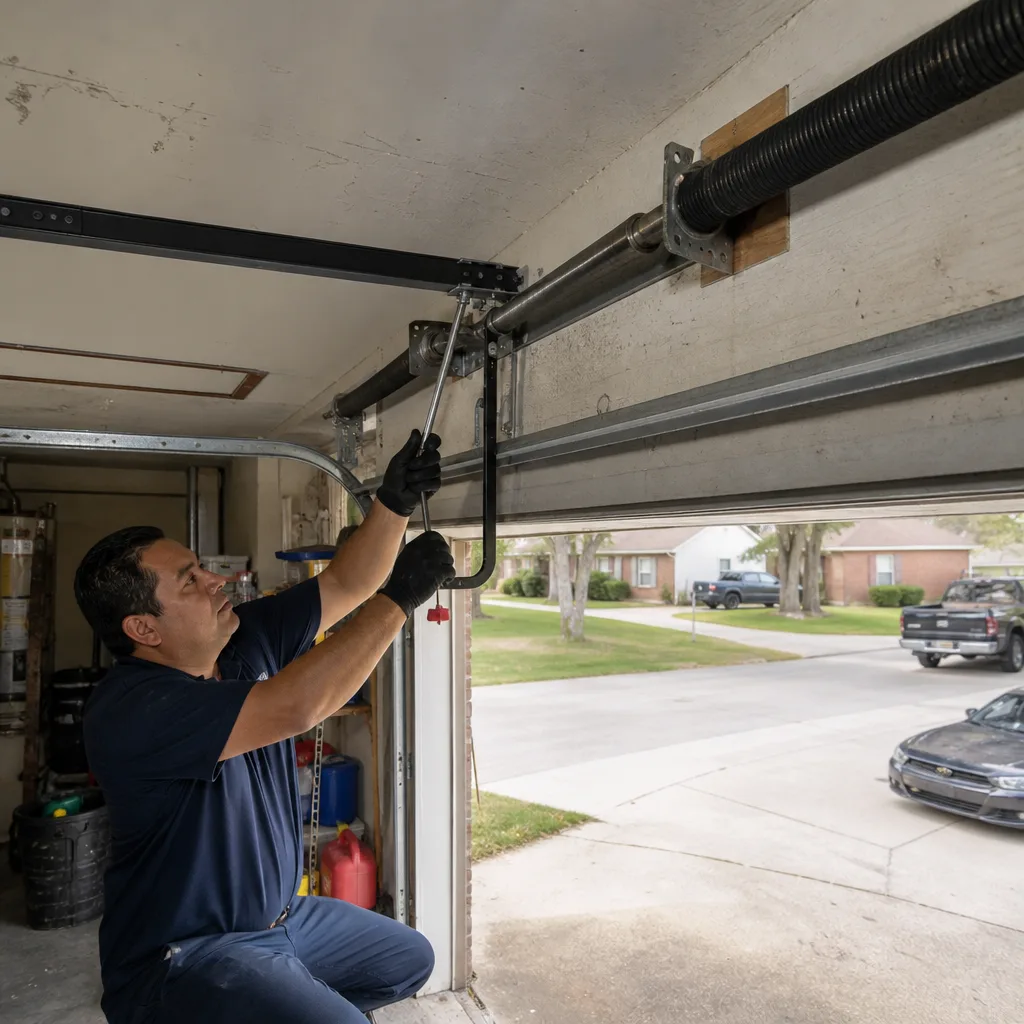 Before
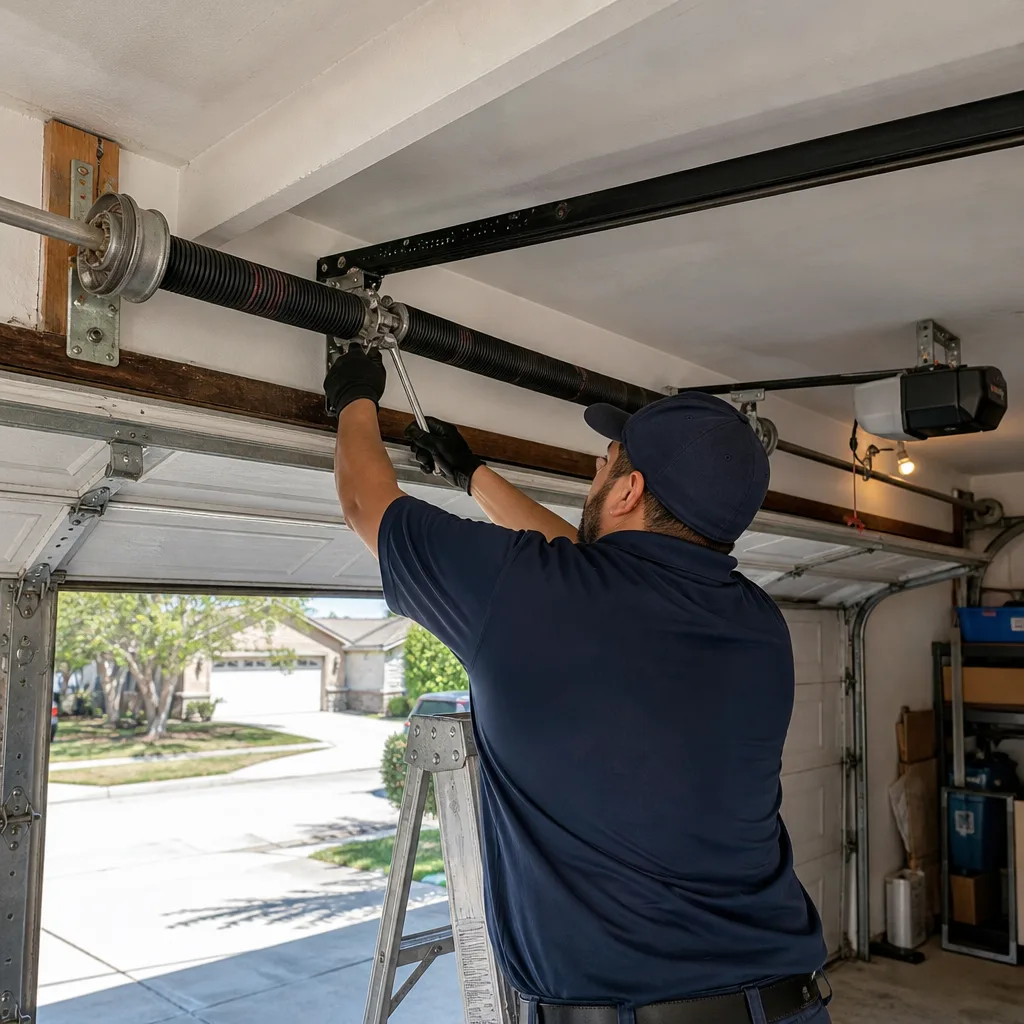 After
After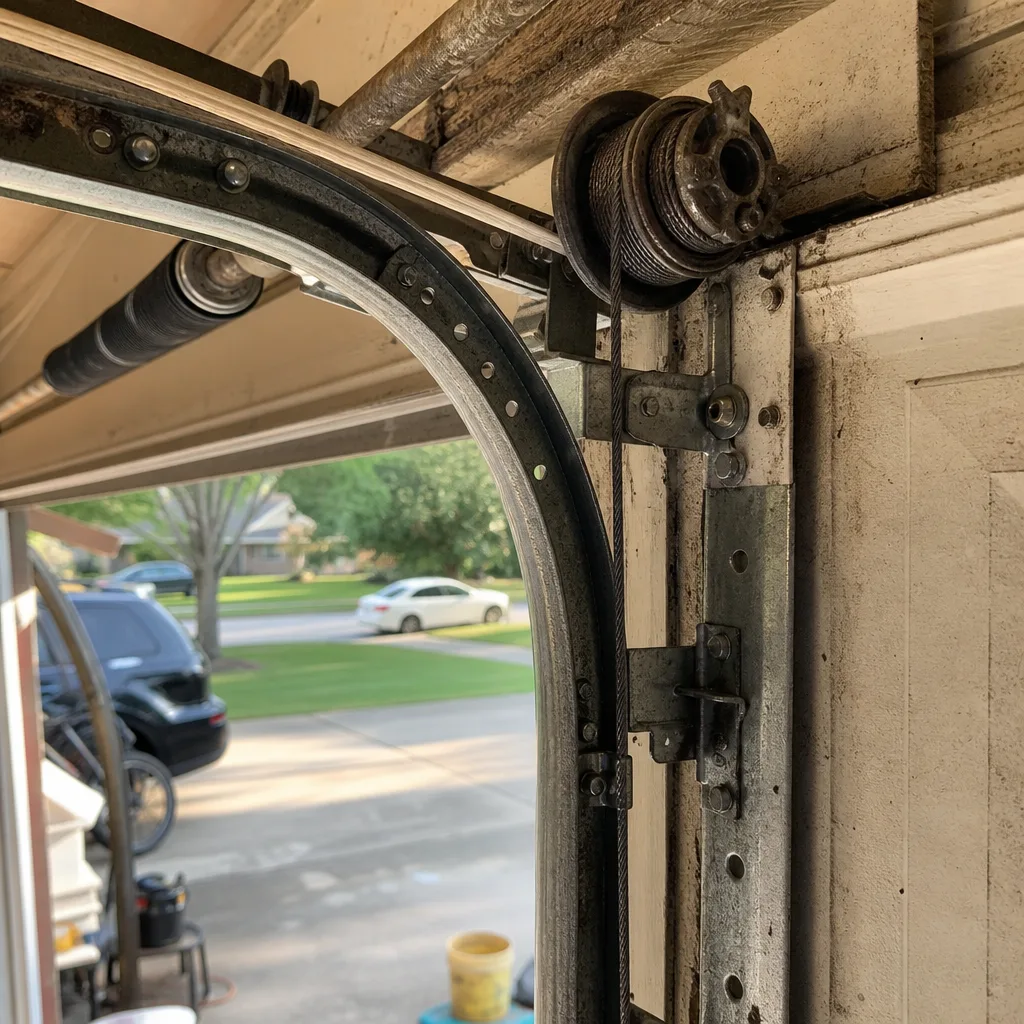 Before
 After
After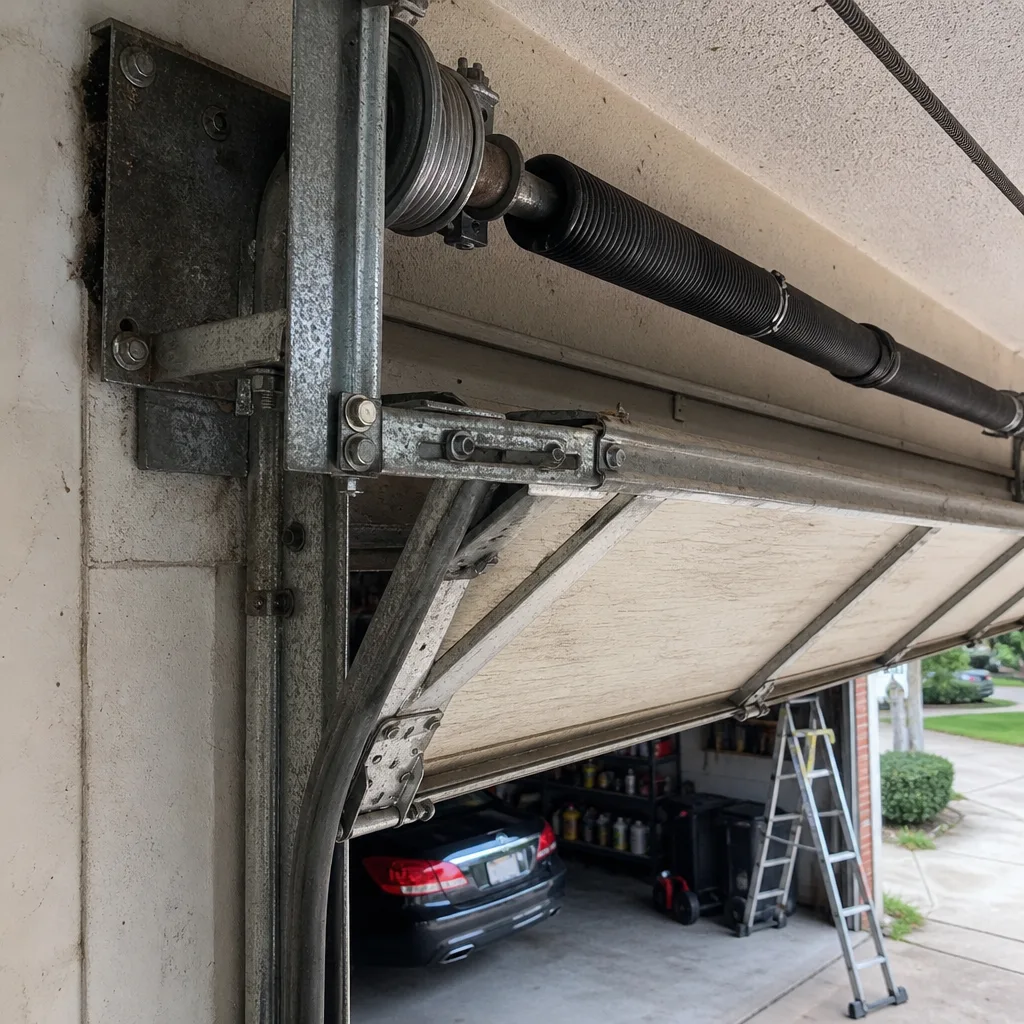 Before
 After
After