

Last updated October 16, 2026
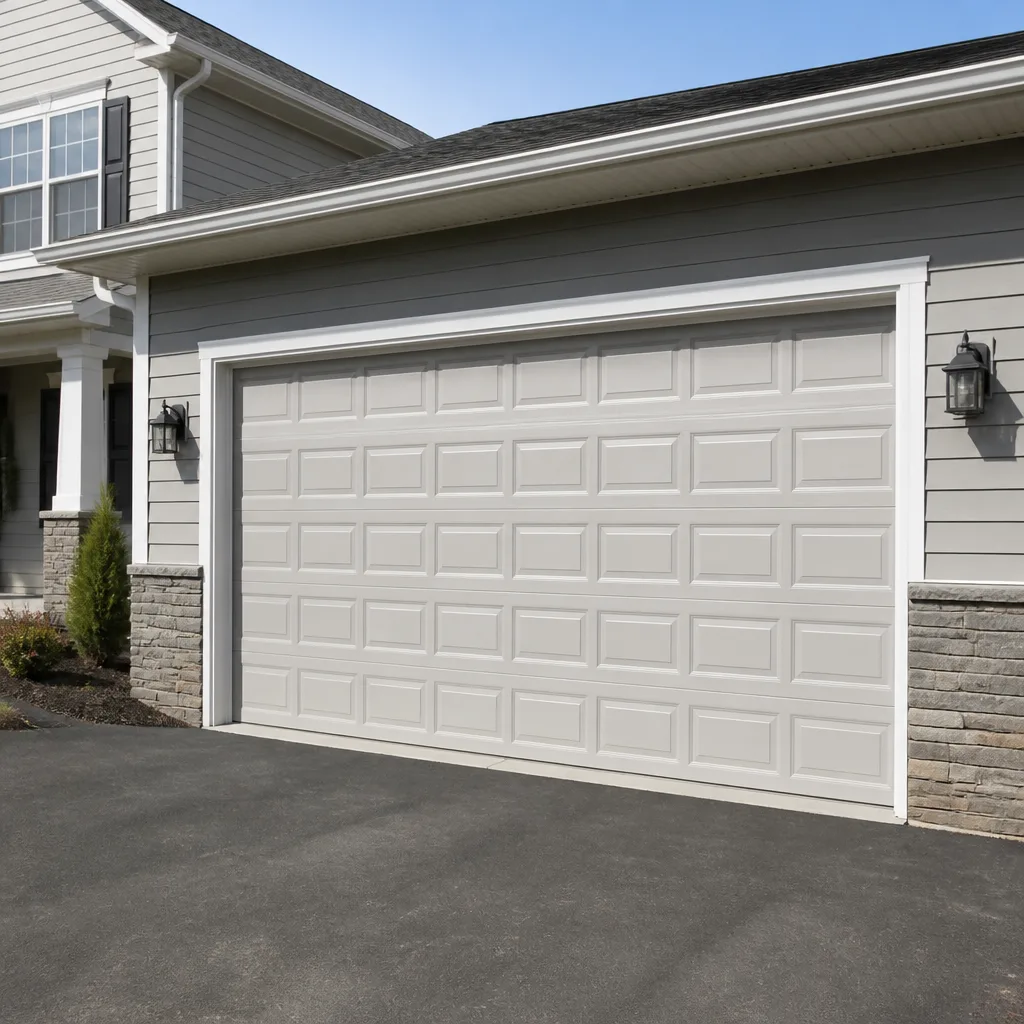 Raised-panel steel
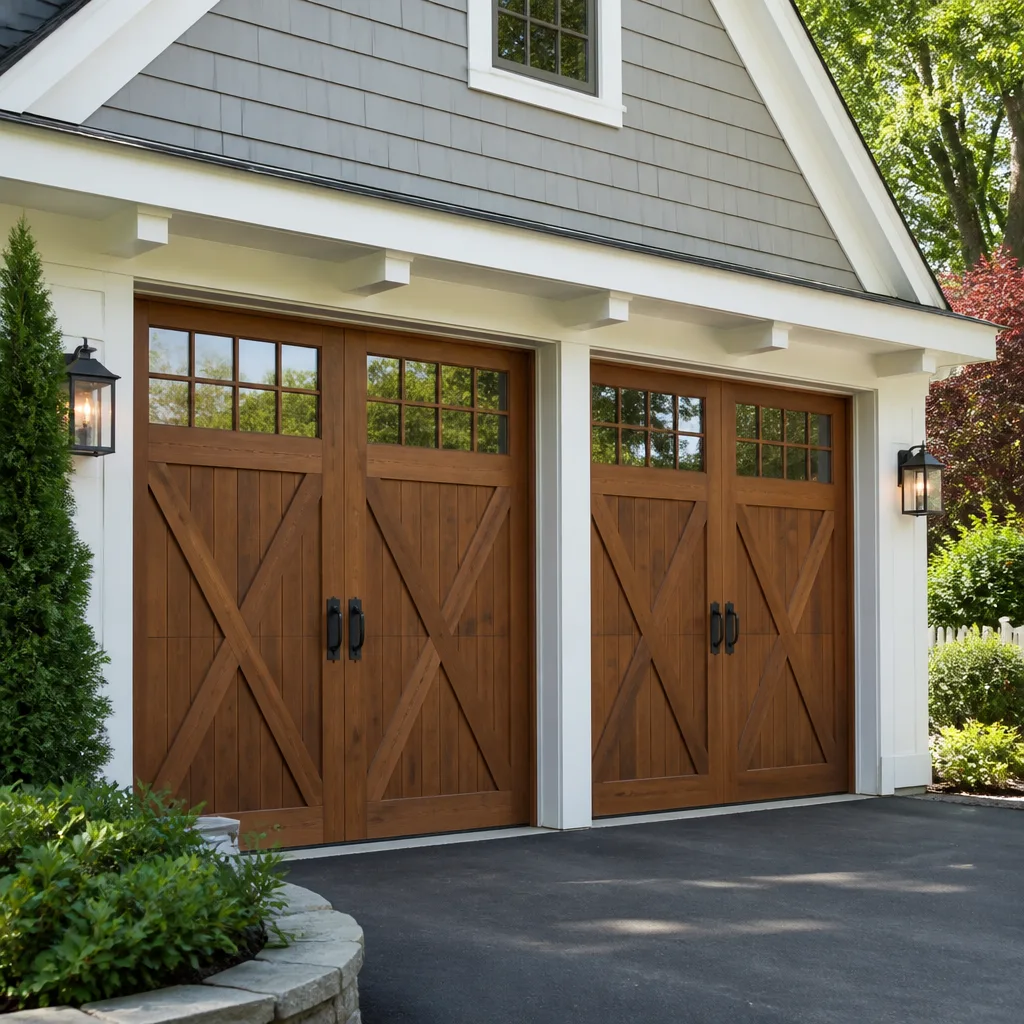 Carriage house
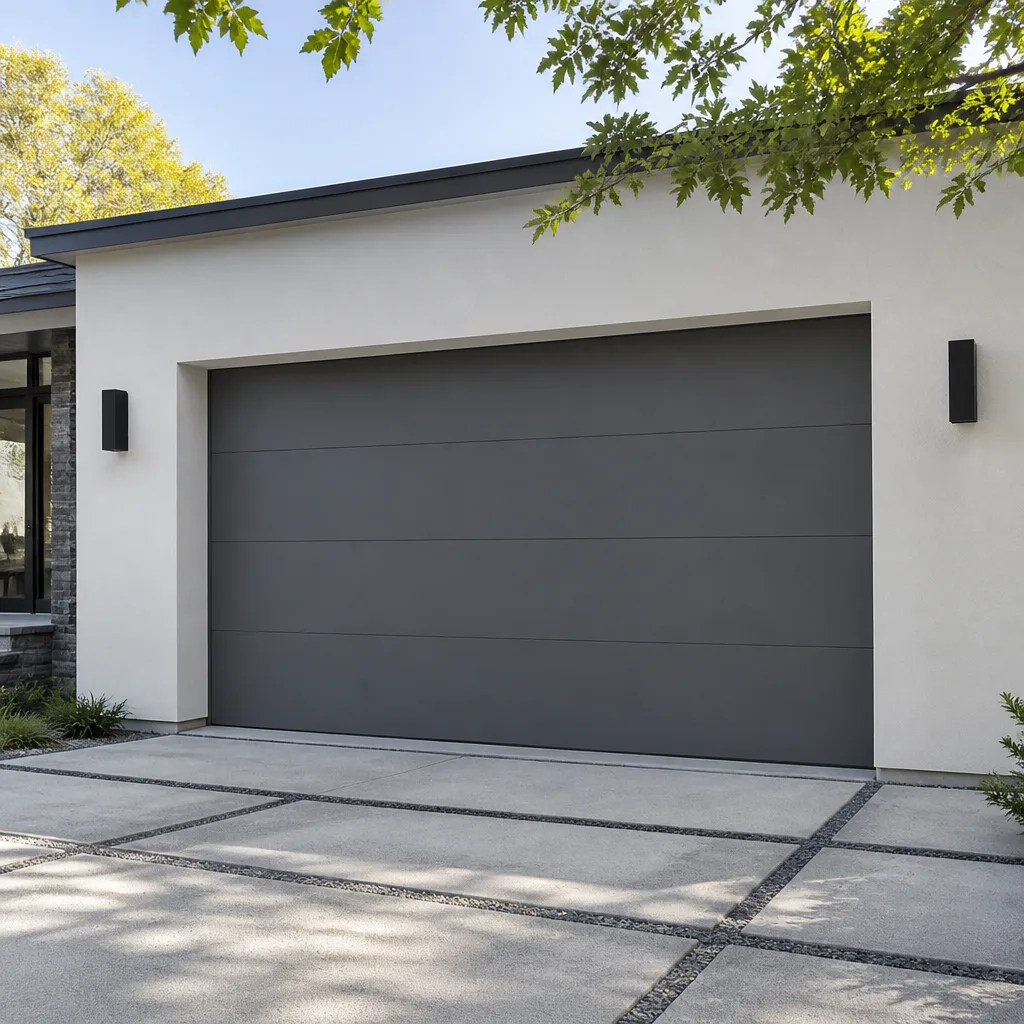 Modern flush
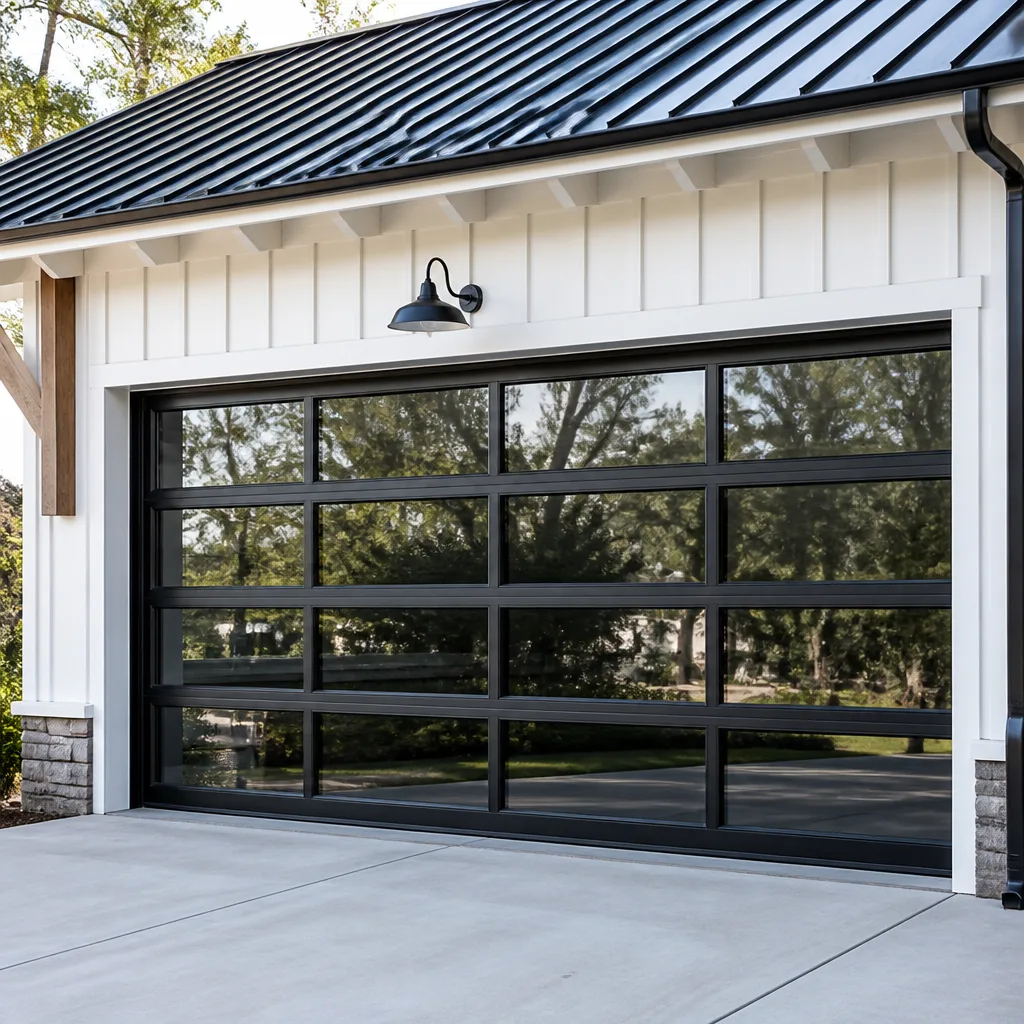 Full-view glass
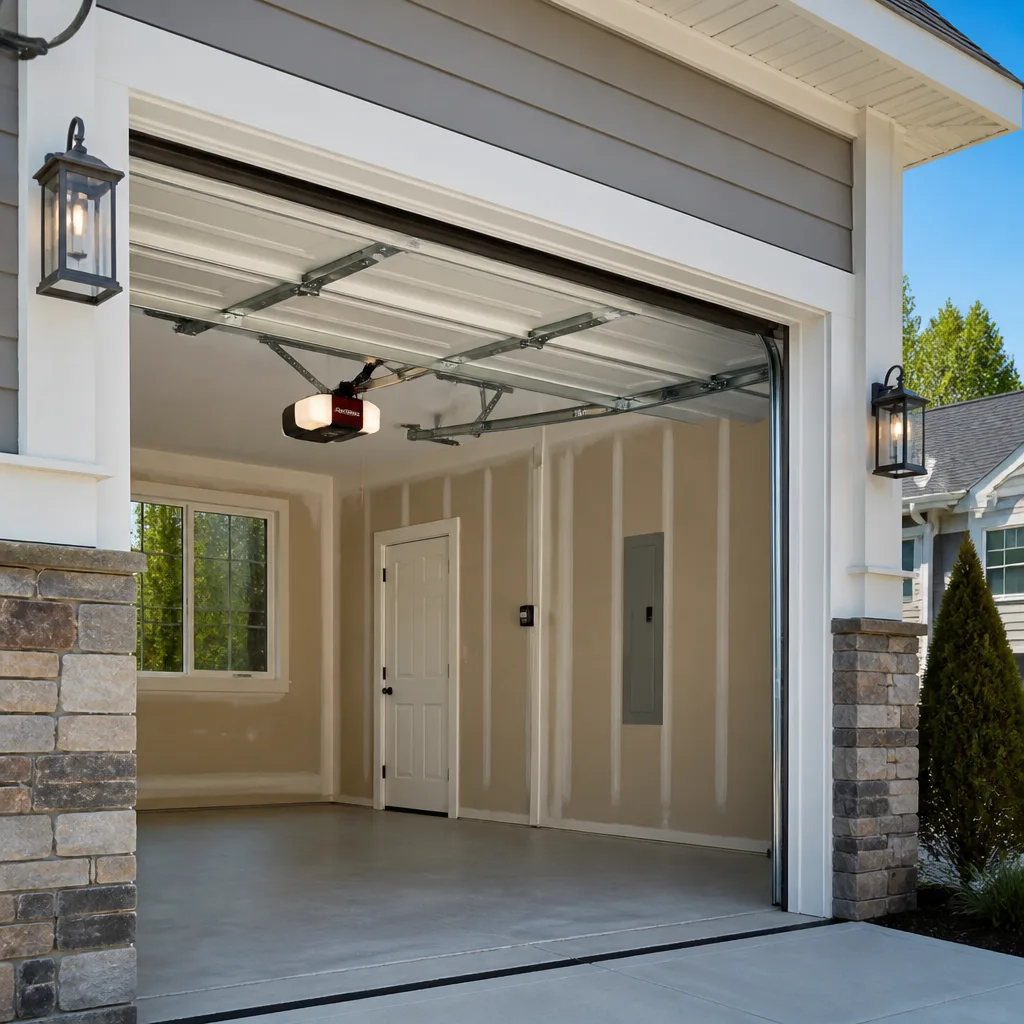 LiftMaster openers
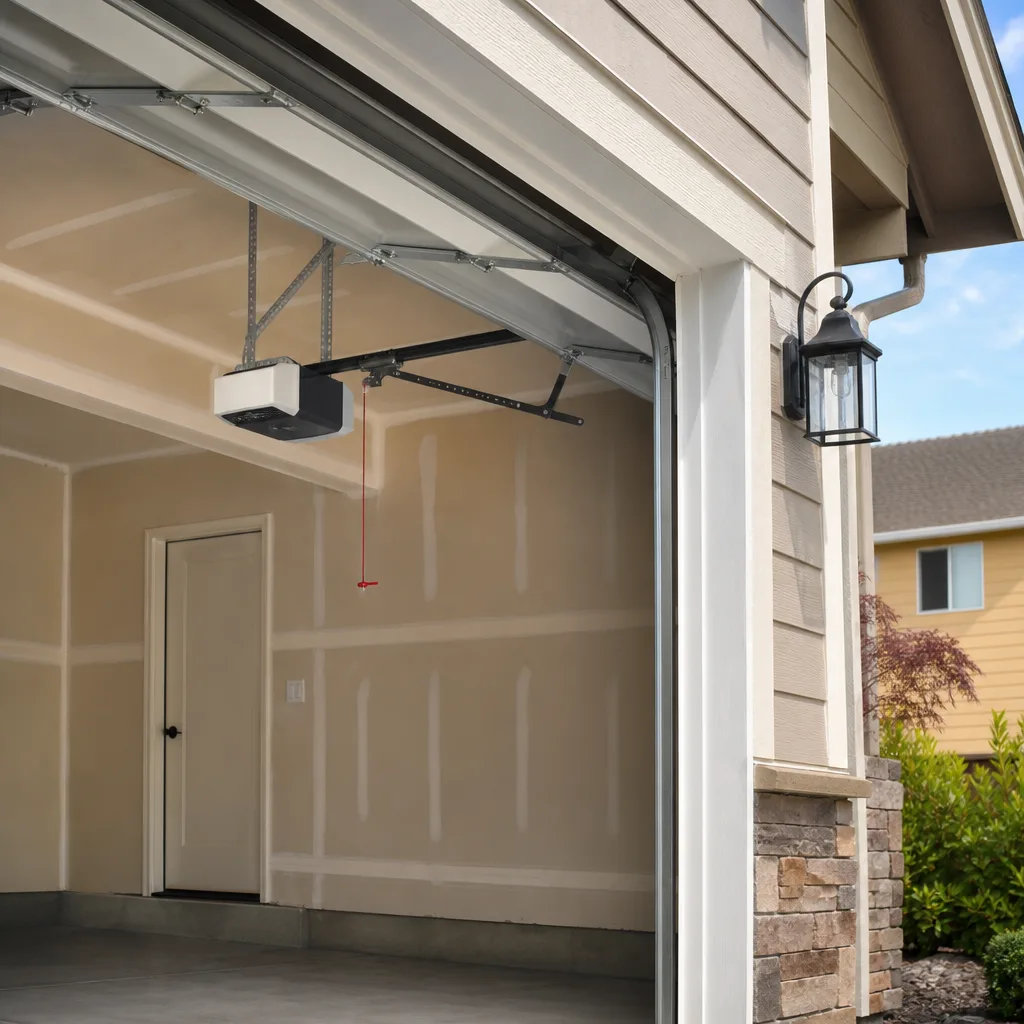 Chamberlain openers
Full 25-point door and opener safety check with every visit - springs, cables, rollers, tracks, and your LiftMaster or Chamberlain opener included
You get a price before we start. It does not change when the truck arrives.
Get your free estimateThe Complete Guide to Garage Door in Houston
Houston averages 49 inches of rain a year and sits on some of the most expansive clay soil in the country. Those two facts quietly destroy garage doors that were spec’d for drier, more stable ground. Most garage door guides treat Houston like any other Sun Belt city. They’re wrong. This guide covers what actually matters here: clay soil movement, humidity-driven material failure, hurricane wind-load requirements, and the real cost of owning a garage door over a decade. If you live in Houston and want to avoid buying the same problem twice, this is the reference you need.
Quick Answer
Garage door ownership in Houston comes down to three local realities: expansive clay soil shifts door framing over time, high humidity and UV exposure punish the wrong materials, and hurricane wind zones demand doors rated for uplift pressure. Choose a steel door of at least 24-gauge thickness with a wind-load rating appropriate for your ZIP code, budget roughly $120 to $180 per year for maintenance, and replace torsion springs every 7 to 10 years before they snap. For repairs you can’t safely do yourself, Garage Door Repair in Houston should be handled by a licensed professional who puts the price in writing before work begins.
Styles & brands we work with
Table of Contents
- Why Houston’s Clay Soil Is a Garage Door Problem
- Best Garage Door Materials for Houston’s Humidity and UV
- Houston Wind-Load Requirements: What the Labels Mean
- The 10-Year Cost Arc of Garage Door Ownership in Houston
- How to Read a Houston Garage Door Estimate Line by Line
- Seasonal Maintenance Schedule for Houston Homes
- Common Mistakes to Avoid
- When to Call a Professional
Why Houston’s Clay Soil Is a Garage Door Problem
Houston sits on the Beaumont and Lake Charles clay formations, which expand when wet and contract when dry. This is not a subtle movement. Depending on the moisture content, Houston clay can swell by 10 percent or more in volume. Your home’s foundation sits on this clay. So does the concrete slab under your garage. When the soil moves, the slab moves. When the slab moves, your garage door tracks move with it.
We see this failure mode in Houston neighborhoods across the metro: Katy, Cypress, Pearland, Sugar Land, The Woodlands, and older inner-loop communities like the Heights and Montrose. The symptom is almost always the same. The door starts binding halfway up. Or it makes a grinding noise at a specific point in the travel. Or one side sits visibly lower than the other. Homeowners assume the door is broken. Often, the door is fine. The opening it sits in has shifted.
What this means for you:
- Don’t ignore a door that’s suddenly hard to open. Binding tracks put stress on the opener motor, the springs, and the hinges. A $200 track adjustment beats a $600 opener replacement.
- Check the gap between the door and the frame. If it’s wider at the top on one side, the frame has likely moved. This is a framing issue, not a door issue.
- Expect periodic re-alignment in Houston. Homes on expansive clay rarely stay perfectly square. A door that worked perfectly two years ago may need a track adjustment after a dry summer or a wet spring.
- Fix the water first. If you see cracks in the garage slab or gaps at the base of the wall, address drainage around the foundation. Gutters, French drains, and proper grading reduce the clay’s moisture swings and slow the movement.
This is the piece of garage door ownership most national guides never mention. They assume a garage door opening stays square. In Houston, it doesn’t. Plan for it.
Best Garage Door Materials for Houston’s Humidity and UV
Houston’s climate punishes garage doors in three ways: sustained high humidity, intense UV exposure, and salt-tinged air near the coast. The material you choose determines whether you’re repainting every two years or keeping the same door for two decades.
Steel (24-gauge minimum, preferably 26-gauge): The workhorse material for Houston. Steel doors are dimensionally stable, meaning they don’t warp when humidity swings from 40 percent to 90 percent in a week. The critical specification is gauge. A 27-gauge or 28-gauge door is thinner and dents more easily, especially in Houston’s hailstorms. A 24-gauge door with a factory-applied primer on both sides resists rust well, provided you don’t scratch through the finish. Look for doors with a rust-through perforation warranty, not just a paint warranty. In our experience, a steel door with a good factory finish lasts 15 to 20 years in Houston with basic maintenance.
Aluminum: Lighter than steel and naturally rust-resistant. Good for coastal Houston homes in Clear Lake, Seabrook, and Galveston where salt air accelerates steel corrosion. The tradeoff is strength and cost. Aluminum doors dent more easily and typically run 20 to 30 percent more than comparable steel. If you’re within a few miles of Galveston Bay, aluminum is worth considering. Inland, steel is usually the better value.
Wood composite: The classic look without the maintenance nightmare of solid wood. Solid wood doors look beautiful for about three years in Houston, then the humidity starts swelling panels, splitting joints, and inviting rot. Wood composite, which is compressed wood fibers with an overlay, holds its shape better. But it still needs repainting every four to six years and is the heaviest option, which means more spring cycles per use and earlier spring replacement. Amarr and Wayne Dalton both make composite doors engineered for humid climates. They’re a good middle ground if you want the wood look without the wood problems.
What to avoid: Untreated wood doors. Cheap steel doors under 27-gauge. Vinyl doors in direct afternoon sun, which can sag over time in Houston’s heat.
For opener compatibility across any of these materials, Garage Door Opener Repair in Houston covers the drive systems that pair with each door type.
Houston Wind-Load Requirements: What the Labels Mean
Houston sits in a hurricane-vulnerable zone. The Texas Department of Insurance maintains windstorm designations by county and, in some cases, by ZIP code. Harris County homes in designated catastrophe areas must meet Garage Door Permits, Codes & Inspections in TX: What You Need to Know, including wind-load requirements set by the Texas Windstorm Insurance Association. The specific rating your door needs depends on your location and, in some cases, the height and exposure of the structure. Coastal ZIP codes have stricter requirements than inland neighborhoods.
What “windstorm rated” actually means on a product label:
- Design wind pressure (PSF): Measured in pounds per square foot. Houston doors in windborne debris regions may need a rating of 30 PSF or higher. The label will state the tested pressure.
- Windborne debris protection: This means the door has been tested to withstand impact from a 9-pound 2×4 fired at the door at highway speed. Not all wind-rated doors have debris protection. If your ZIP code requires it, the product label will say so.
- NOA or FL product approval: Many Houston doors carry Miami-Dade or Florida Building Code product approval numbers, which are the most stringent wind tests in the country. If a door passed Miami-Dade, it passes Houston.
- Reinforcement struts: Metal bracing bolted across the interior of the door to keep it from bowing inward under pressure. If your area requires a high PSF rating, your door will have these.
Don’t guess at this. Your installer should check the wind-load map for your address and spec the door accordingly. A door without the right rating may fail during a hurricane, and the resulting damage to the garage and the rest of the home can be catastrophic. It also affects your insurance. An incorrectly rated door can void a windstorm claim.
The 10-Year Cost Arc of Garage Door Ownership in Houston
Most homeowners think of a garage door as a one-time purchase. It isn’t. Over a decade in Houston, the true cost includes the initial purchase, installation, ongoing maintenance, and at least one major repair. See our Garage Door Cost Breakdown: The Houston Homeowner’s Reference for 2026 for the honest math.
| Cost Item | Typical Range in Houston | Frequency |
|---|---|---|
| New steel door (16×7, basic) | $1,100 to $1,800 installed | Once every 15-20 years |
| New door with windows and insulation | $1,800 to $3,200 installed | Once every 15-20 years |
| Torsion spring replacement (both springs) | $220 to $380 | Every 7-10 years |
| Annual maintenance (lubrication, balance check, inspection) | $120 to $180 | Every year |
| Opener replacement | $380 to $650 including labor | Every 10-12 years |
| Cable replacement | $150 to $275 | Every 8-12 years, sooner if frayed |
| Track realignment (due to clay soil movement) | $90 to $200 | Every 2-4 years in many Houston homes |
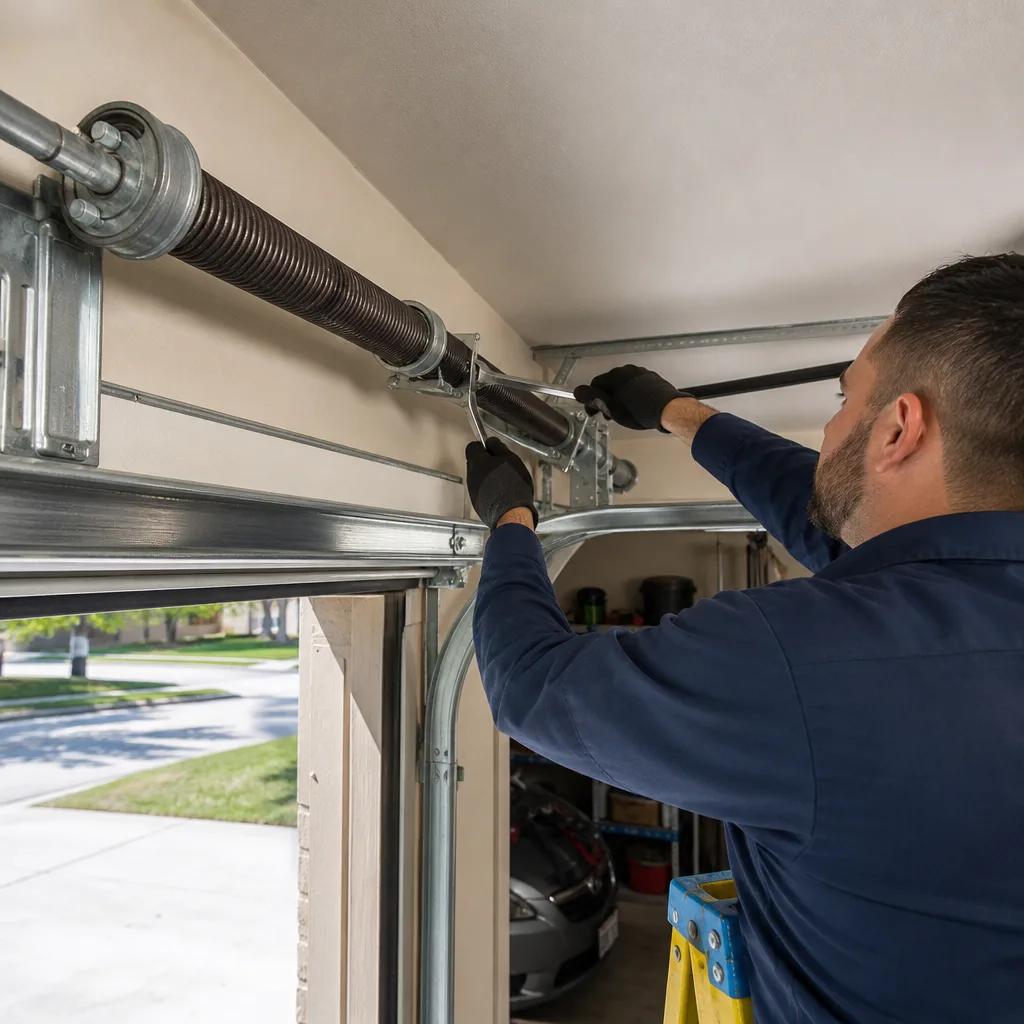
The repair most Houston homeowners don’t budget for is spring replacement. Torsion springs, the thick coiled springs mounted above the door that bear most of the lifting load, are rated for a set number of cycles. The typical 10,000-cycle spring lasts about 10 years of normal use. In Houston, two factors shorten that lifespan: heat, which accelerates metal fatigue, and humidity cycling, which contributes to microscopic surface corrosion on the spring. If you buy a home with an existing garage door, budget for spring replacement sooner rather than later. We recommend homeowners plan for a $250 to $400 spring replacement at some point in years one through five of owning a pre-owned home in Houston. It’s the single most common repair we perform, and it almost always happens without warning.
For a deeper breakdown of repair costs and what drives them, see Garage Door Repair in Houston.
How to Read a Houston Garage Door Estimate Line by Line
A written estimate is either complete or it’s hiding something. In Houston’s competitive garage door market, the low bid often isn’t the low bid once labor and disposal get added back in. Here’s how to read what you’re handed.
- Material line: Look for the manufacturer name and the model number. Amarr, Wayne Dalton, Raynor, and Craftsman all stamp model numbers on their doors. If the estimate says “steel door” with no brand or model, you can’t compare prices. Walk away.
- Labor line: Does the estimate separate labor from materials? It should. Flat quotes that bundle everything into one number make it impossible to see what you’re actually paying for.
- Sections and track: Some doors need new track, not just new panels. If your existing track is bent or out of alignment, the estimate should include replacement track and the hardware. If it doesn’t, expect a call from the installer about an “unexpected” additional cost.
- Disposal and haul-away: Your old door isn’t going to fit in the weekly trash pickup. A legitimate estimate includes removal of the old door and all packaging. If there’s a separate “disposal fee” that seems suspiciously high for one door, ask what it covers.
- Springs and cables: On a full door replacement, new springs and cables should be included without a separate line item on top. On a spring repair, the estimate should state the spring type, wire size, and cycle rating. Two springs replaced together costs more up front but lasts longer than a single replacement.
- Wind-load compliance: If your ZIP code requires wind-rated doors, the estimate must state the PSF rating of the door being installed. If it doesn’t, the installer may be quoting you a door that isn’t code-compliant for your location.
- Warranty terms: The estimate should say what’s covered, for how long, and in writing. A verbal “we stand behind our work” doesn’t help you in month 11 when the spring breaks again.
Brock Garage Doors Houston hands you a written price before any work starts. The number you approve is the number you pay. If a contractor won’t put the price in writing before the work begins, that’s your signal to find someone who will.
Seasonal Maintenance Schedule for Houston Homes
Houston’s climate doesn’t have four seasons in the traditional sense. It has wet season, dry season, hurricane season, and a few pleasant weeks in between. Adjust your garage door maintenance accordingly, or browse more guides & resources.
Spring (March to May): After the winter rains, inspect the tracks for rust and the rubber seals for cracking. Lubricate the rollers, hinges, and springs with a silicone-based lubricant. Do not use WD-40, which attracts dirt and gums up the tracks. Check the bottom seal for gaps where Houston’s spring insects and humidity can get in.
Summer (June to September): Hurricane season. Test the door’s balance by disconnecting the opener and lifting the door manually. It should stay in place at the halfway point without drifting. Check hurricane bracing if your door has it. Confirm the auto-reverse safety feature works by placing a 2×4 under the door and closing it. If the door doesn’t reverse, call a professional.
Fall (October to November): The driest months in Houston are when clay soil contracts most aggressively. Check the door for signs of frame shift: uneven gaps, binding tracks, or new grinding noises. Address drainage around the foundation before the spring rains return.
Winter (December to February): Run the opener manually to check for smooth travel. Cold snaps in Houston are rare but they do happen, and metal contracts slightly in the cold. Check all bolts and brackets for tightness. This is also the quietest season for repair demand, which can mean faster scheduling if you have a repair you’ve been putting off.
For cable-specific issues, which often show up as frayed or sagging cables during seasonal inspections, see Garage Door Cable Repair in Houston.
Common Mistakes to Avoid
- Ignoring a door that’s harder to open than it used to be. In Houston, this is often the first sign of slab movement or a spring about to fail. Both problems are cheaper to fix early.
- Buying the thinnest steel door to save money. A 28-gauge door in a Houston hailstorm doesn’t stand a chance. You’ll replace it in five years and spend more than if you’d bought a 24-gauge door the first time.
- Skipping annual lubrication. Houston’s humidity and heat accelerate wear on rollers and hinges. Thirty minutes of maintenance a year extends the life of every moving part.
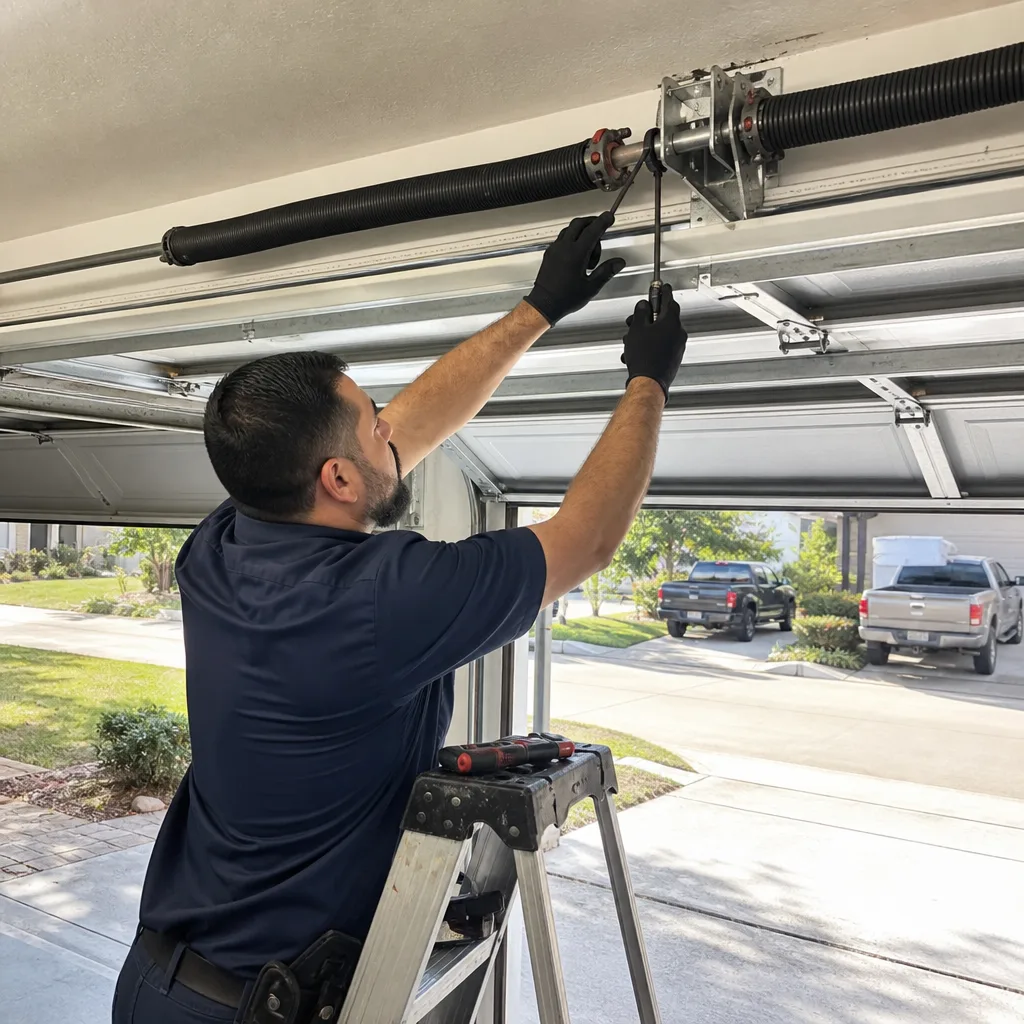
- Attempting to replace torsion springs yourself. Torsion springs are under hundreds of pounds of tension. A snapped spring can cause serious injury or death. This is not a DIY repair. Call a trained professional.
- Accepting a verbal estimate. In Houston’s repair market, the price agreed at the kitchen table and the price on the invoice should be identical. If it’s not in writing, it didn’t happen.
- Ignoring wind-load requirements. Buying a non-rated door for a hurricane-zone ZIP code saves a few hundred dollars up front and creates a serious liability during the next storm. The insurance implications alone should deter you.
- Painting a wood door without proper prep. In Houston’s humidity, paint failure on wood doors happens fast. If you must have wood, budget for professional repainting every three to four years.
When to Call a Professional
Some garage door work is safe and reasonable for a homeowner. Lubricating rollers, checking seals, and testing the auto-reverse are all fair game. Other work is dangerous. If your torsion spring has snapped, call a professional. If the cables have frayed or snapped, call a professional. Those components are under extreme tension and can cause severe injury even during a routine adjustment. If the door is off its tracks or the opener needs electrical work, that’s also a job for a trained technician. Brock Garage Doors Houston offers free estimates in Houston, and a live person answers the phone around the clock. Call (325) 308-2009 and we’ll put the price in writing before any work begins.
See the difference
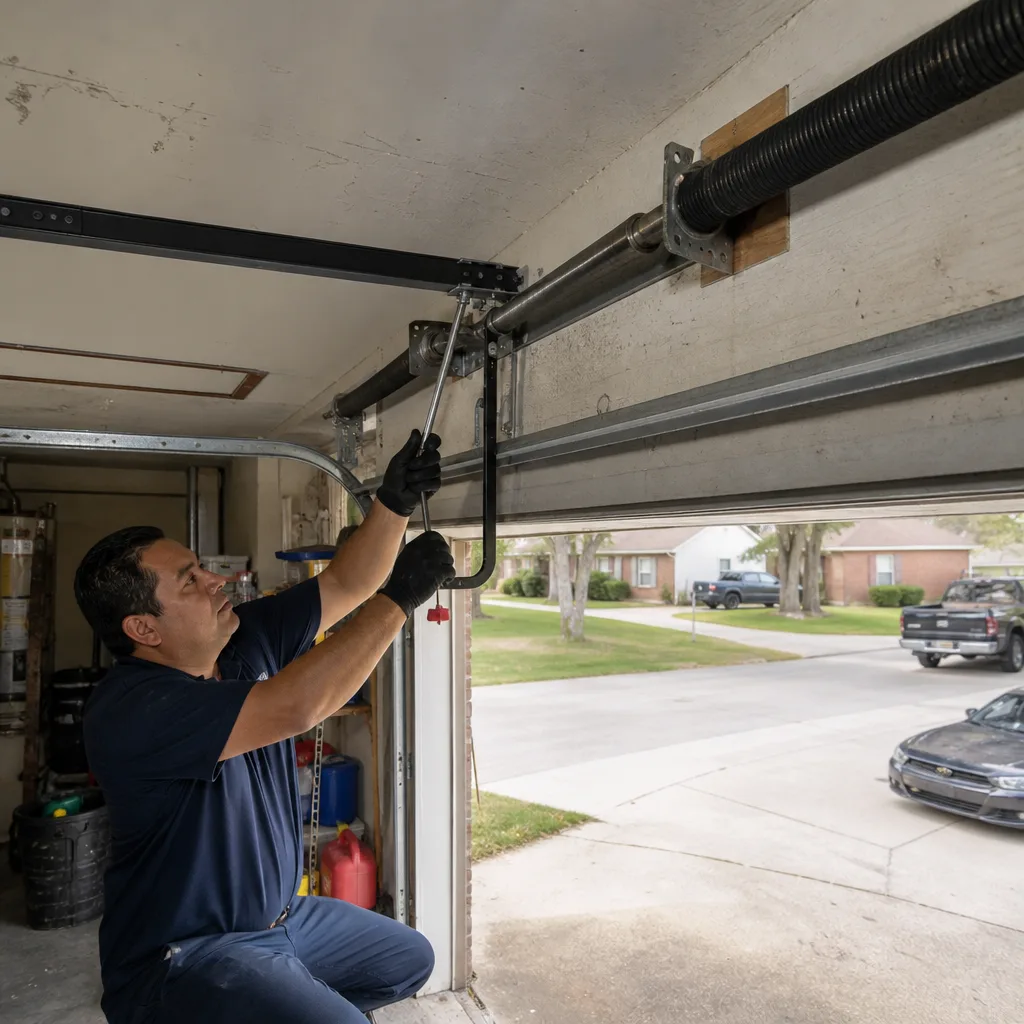 Before
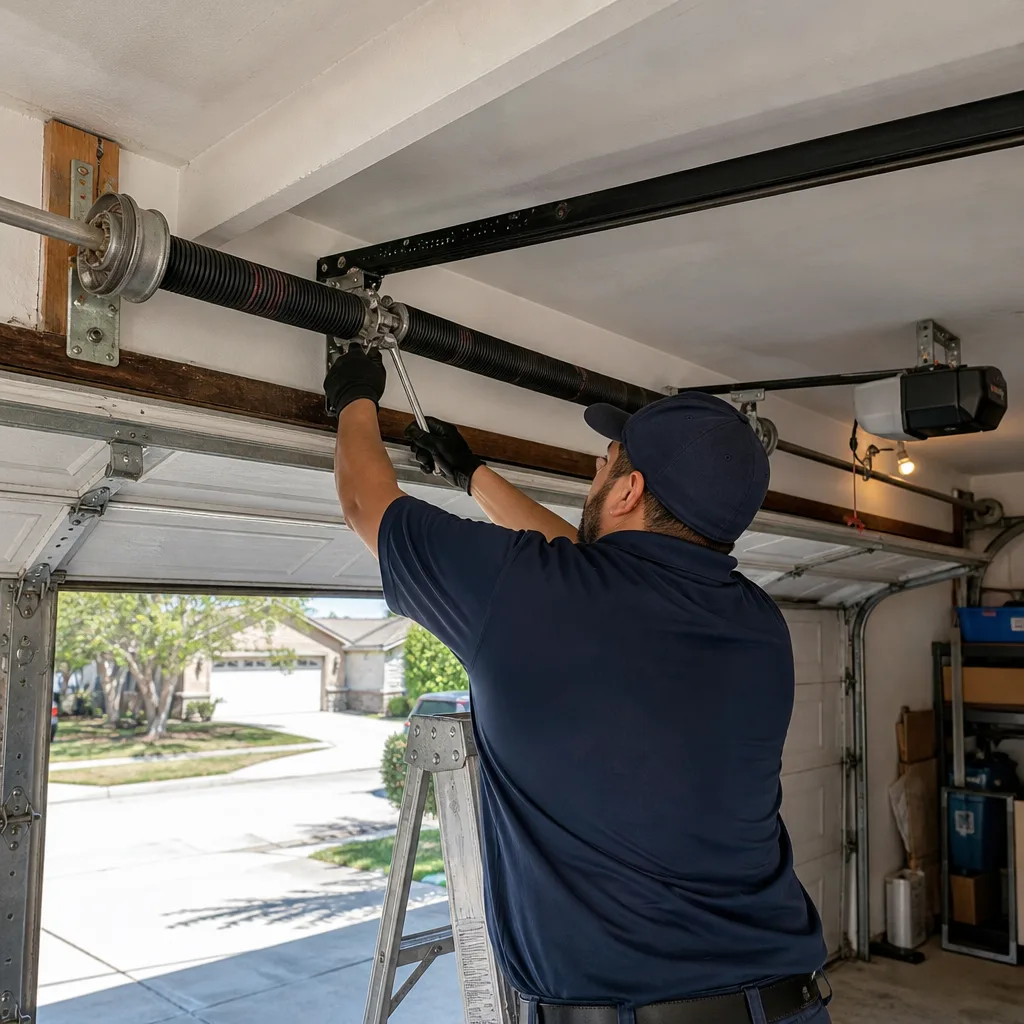 After
After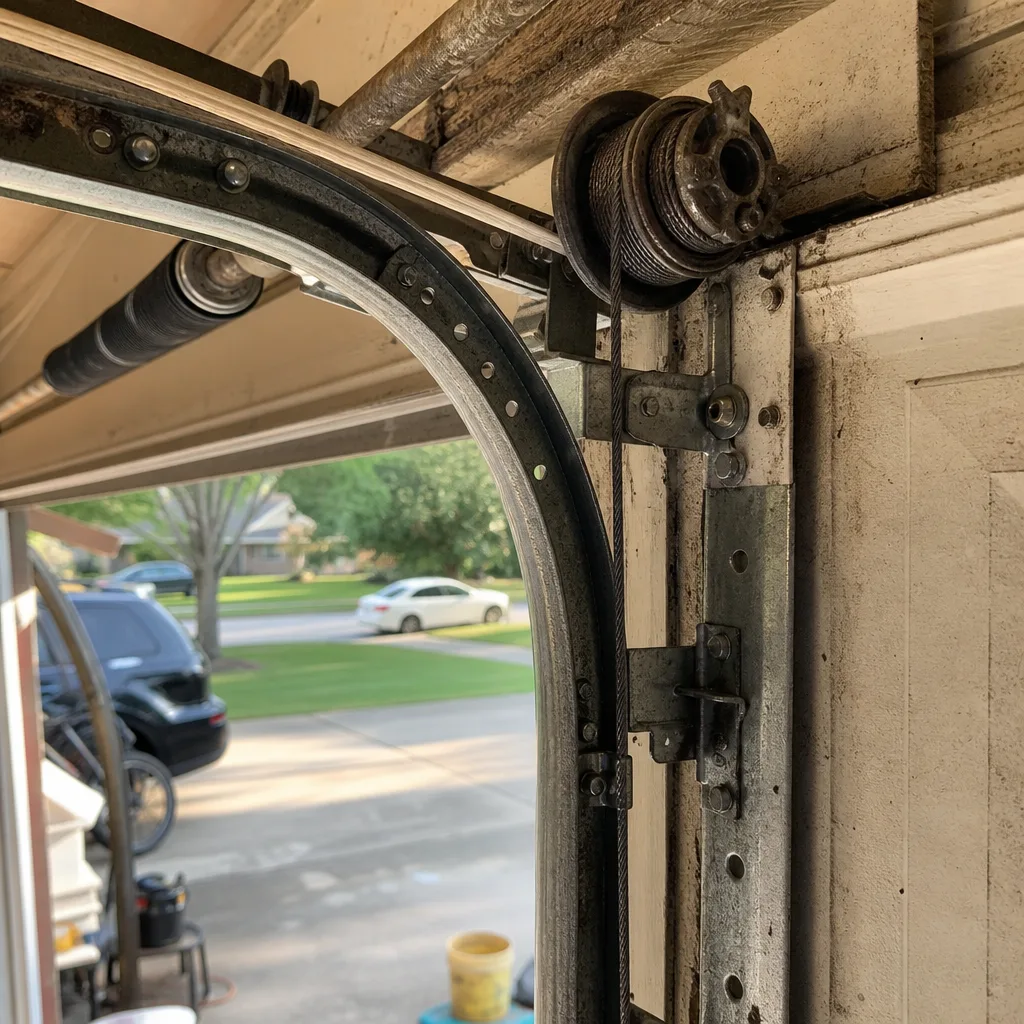 Before
 After
After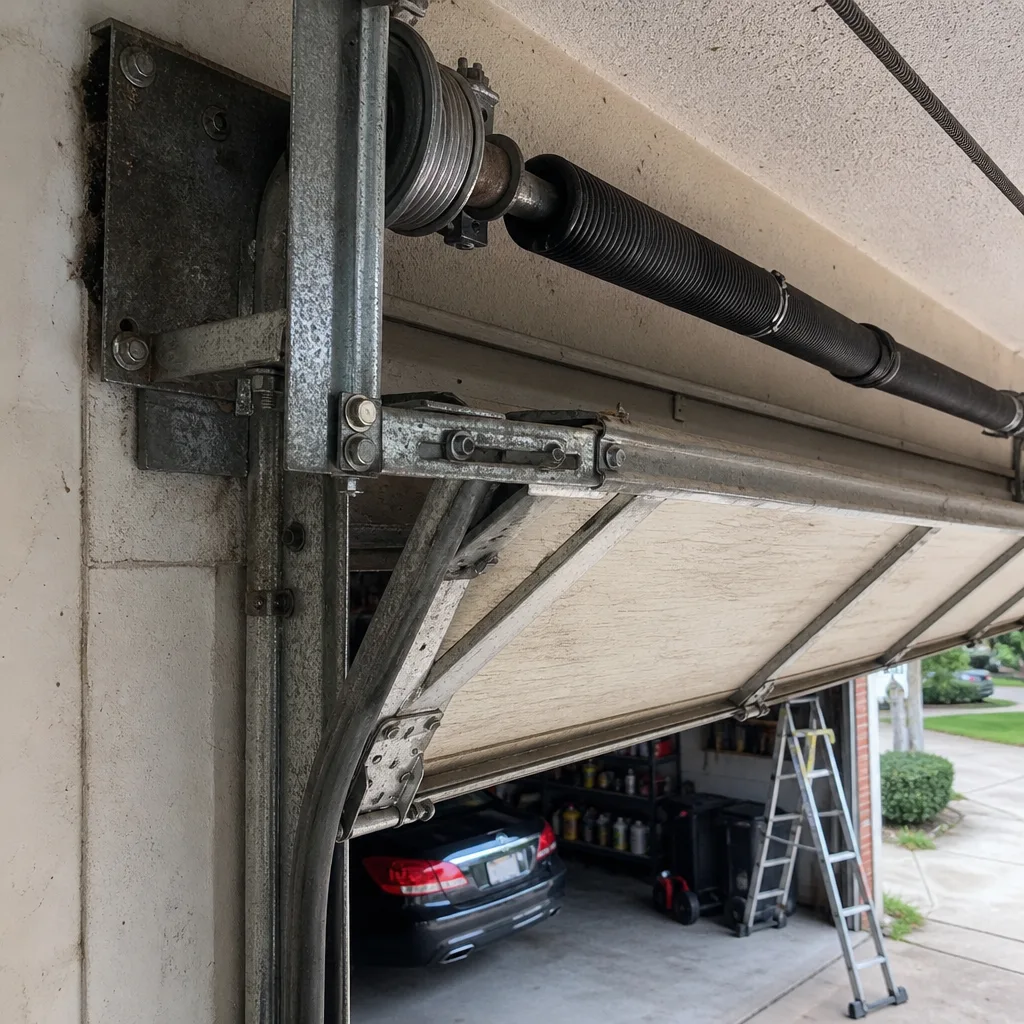 Before
 After
AfterFrequently Asked Questions
A basic 16×7 steel garage door in Houston typically costs $1,100 to $1,800 installed, while an insulated door with windows runs $1,800 to $3,200 depending on material, gauge, and wind-load rating. The final number depends on your specific opening size and whether the existing track and hardware can be reused. Call (325) 308-2009 for a written quote specific to your home.
Most torsion springs in Houston last 7 to 10 years, though the city’s heat and humidity can shorten that lifespan by a year or two compared to drier climates. Springs are rated by cycles, not years, and the average 10,000-cycle spring gives out after about a decade of normal use. When one spring breaks, replace both, since the second is at the end of its service life too.
Yes, homes in Houston’s designated windstorm zones must have garage doors rated for the specific wind pressure of their location. The requirement varies by ZIP code and proximity to the coast, with areas near Galveston Bay needing the highest ratings. Your installer should verify the requirement for your address before quoting a door.
A garage door that sticks halfway up in Houston is often the result of clay soil movement shifting the door frame or tracks out of alignment. The expansive clay under Houston homes swells and contracts with moisture, and over time this moves the concrete slab and the tracks mounted to it. A track realignment typically resolves the issue.
No, you should not replace a garage door spring yourself. Torsion springs are wound under hundreds of pounds of tension, and a mistake during winding or unwinding can cause the spring to release suddenly with enough force to cause serious injury or death. This repair requires specific tools and training.
Most garage door cable repairs in Houston run $150 to $275, depending on cable type and drum condition. Cables on torsion spring systems are under the same tension load as the springs, which means this repair is also best left to a professional. For exact pricing on your door, call (325) 308-2009 and we’ll quote the job in writing before any work starts.
The Bottom Line
Owning a garage door in Houston is different from owning one anywhere else. The clay soil moves your frame. The humidity ages your materials faster. The hurricane codes dictate what you’re allowed to install. Get ahead of all three by choosing a 24-gauge or thicker steel door with the correct wind-load rating, budgeting for spring replacement every decade, and having your tracks checked when the door starts binding. If a repair is beyond your comfort level, Brock Garage Doors Houston home is one call away. We answer live, we price in writing, and we guarantee the work for a full year. That’s how garage door service should work in Houston.
Written by Wade Mercer, Owner at Brock Garage Doors Houston, serving Houston since 2001.